Table of Contents
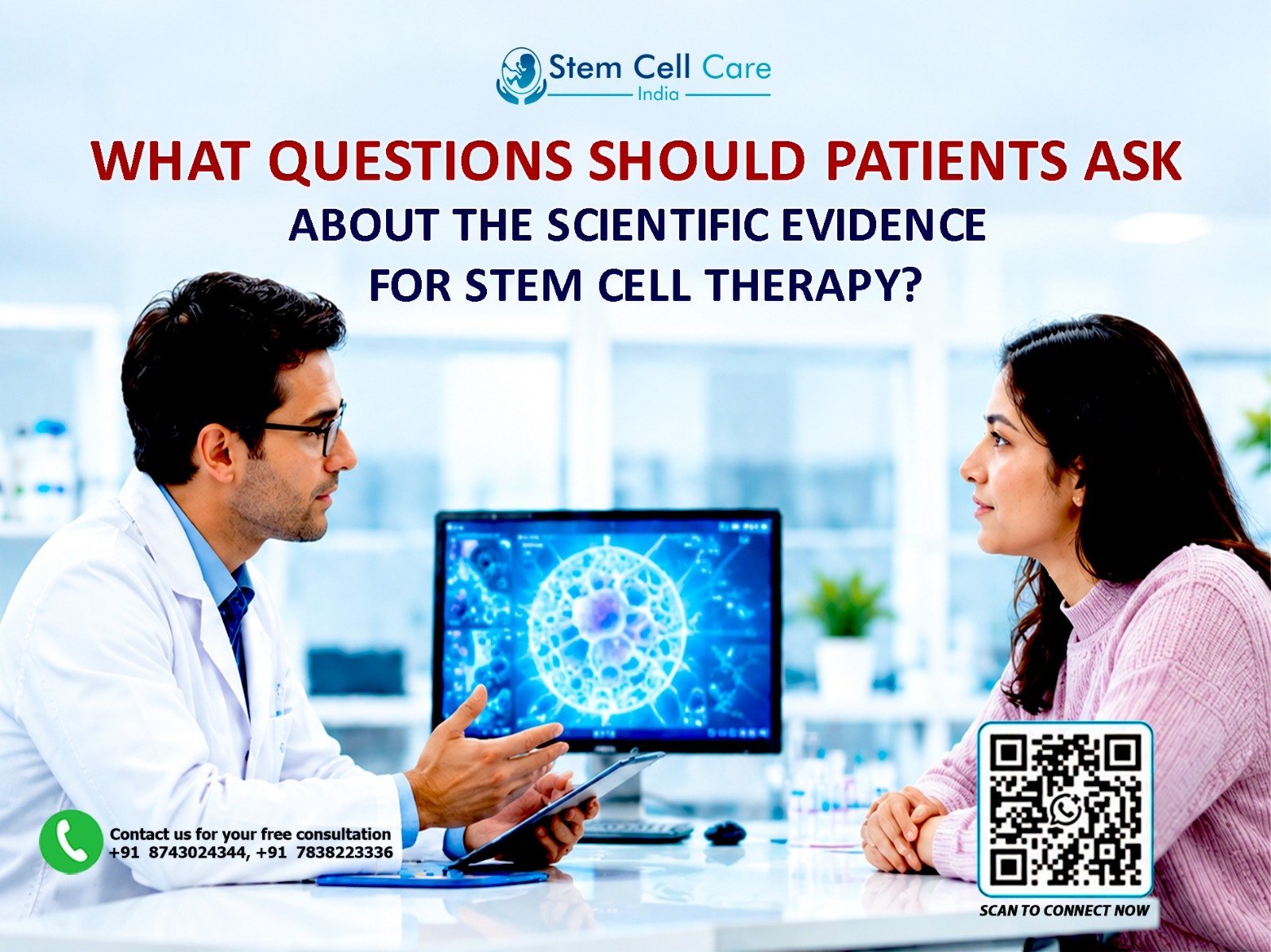
Patients considering stem cell therapy should ask what scientific evidence supports the specific approach, whether it has been studied for their condition, what clinical trials have found, and what risks remain uncertain. They can also ask how the results compare with established treatments and request peer-reviewed research to review the evidence themselves.
Key Takeaways
- Ask what scientific evidence supports the specific stem cell therapy being considered.
- Check whether the research relates to your particular condition, rather than a different medical use.
- Ask about relevant clinical trials, their findings, and the limitations of the available evidence.
- Consider both potential benefits and known or uncertain risks before making a decision.
- Request peer-reviewed research so you can review the evidence behind the claims yourself.
What Questions Should Patients Ask About the Scientific Evidence for Stem Cell Therapy?
When considering stem cell therapy for your condition, it is easy to encounter research papers, clinic websites, testimonials, and marketing claims that present very different views of the same approach. Knowing how to assess the evidence behind those claims can help you separate useful research from information that may not apply to your situation.
Knowing the right questions to ask makes this information easier to assess.
Understanding the type of research being done, the condition studied, the results reported, and the limitations identified may help you judge whether the current evidence is relevant to your situation. It can also help you have a more informed conversation with your healthcare professional before making a decision.
What Is Stem Cell Therapy?
Stem cell therapy refers to medical approaches that use stem cells or cells derived from them for specific medical conditions. Different cell types and approaches are studied for different purposes, so evidence needs to be assessed for the particular therapy and condition.
Patients should ask what cells are being used, what condition they are being considered for, and whether the approach is established or still under investigation.
What Types of Stem Cells Are Used in Therapy?
Not every type of stem cell has an established clinical use. Different cell types are investigated for different medical applications, so evidence for one type should not automatically be applied to another.
Some of the main types include:
- Hematopoietic Stem Cells: These blood-forming stem cells have established medical uses in certain blood and immune system disorders.
- Mesenchymal Stem Cells (MSCs): These cells are being investigated for various medical conditions, with the level of evidence differing across indications.
- Pluripotent Stem Cells: These cells can develop into many different cell types and are being studied for selected medical applications.
When discussing a stem cell-based approach with a healthcare provider, always ask what type of cells is used in the proposed approach and what level of scientific evidence is available to support the particular type of stem cells.
What Evidence Supports the Effectiveness of This Therapy?
A research study mentioning stem cell therapy does not necessarily mean there is strong evidence for its use in a specific condition. The credibility of the research depends on what was studied, how it was studied, and what the findings actually show.
Important factors to consider include:
- Relevance to the Disease: The research should have some relevance to the same medical disease or be closely related to it.
- Intervention Specificity: Keep cell types, preparation, dosage, and administration methods in mind when interpreting the study’s results.
- Study Design: Different designs of studies include laboratory experiments, observational studies, clinical trials, and systematic reviews.
- Measurable Clinical Results: Better proof is obtained when there are clearly identifiable outcomes that matter to patients, along with findings that relate to safety.
- Consistent Research: Findings supported by multiple relevant studies provide more confidence than an isolated positive result.
- Reported Limitations: Good research identifies uncertainties and limitations rather than presenting findings more broadly than the data allows.
The important difference is between evidence that is available and evidence that is credible enough to support a particular medical claim. Not every published study can support the specific condition.
What Are the Risks and Benefits of Stem Cell Therapy?
When discussing stem cell therapy, patients should consider potential benefits alongside well-known and uncertain risks. Research findings can look promising while still being limited in establishing how safe or useful an approach is for the specific condition.
Potential benefits depend on the type of cells used, the condition being studied, the study design, and the outcomes measured. Some research focuses primarily on safety, while other studies examine clinical outcomes and whether an approach may have a meaningful benefit for patients.
Risks can also vary considerably. Patients should ask about:
- Short-term adverse effects linked to the procedure or administration method
- Long-term safety uncertainties, particularly when evidence is still limited
- Immune or inflammatory reactions associated with the cells or their preparation
- Risks related to the procedure itself, such as infection or bleeding
- Uncertain outcomes when the approach has not been adequately studied for the condition
It may be worthwhile asking whether the benefits are derived from outcomes important to the patient or from those which do not necessarily translate into clinically relevant improvements. The discussion should include an explanation of what is unknown and not just the potential benefits.
The patients need to know about the evidence behind the suggested treatment as well as about the areas of uncertainty.
How Do the Results Compare with Other Treatments?
Patients should not evaluate stem cell therapy results in isolation. It is useful to ask whether the approach has been compared with established treatments for the same condition and whether the difference in outcomes is meaningful.
A useful comparison should consider:
- Clinical Outcome: What difference did it make to the patients, not just in the laboratory.
- Safety: Whether the stem cell therapy involves any added dangers.
- Durability: Whether the results have been durable enough to be clinically important.
- Quality of Comparability: Whether the studies used comparable patients and the proper controls.
When direct comparisons cannot be made, that should be stated. It is important to remember that more recent studies do not necessarily mean better treatment options.
Can Peer-Reviewed Research Help You Evaluate Stem Cell Therapy Evidence?
Peer-reviewed research can help patients look beyond claims made on websites, advertisements, or testimonials. The original paper allows you to see what researchers studied, how they conducted the study, what they found, and what limitations they reported.
When reviewing research, pay attention to:
- Condition and stem cell used
- Number of patients in the study
- Results and safety information
- Limitations of the study
- Whether other studies show similar findings
You can also request the citation for the study, which will allow you to find the original research papers. This allows you to determine whether the claim made regarding the stem cell treatment is scientifically based and whether it applies to you.
The Concluding Thoughts
Before considering stem cell therapy, take time to understand the scientific evidence for the specific therapy and condition involved. Ask for relevant clinical research, understand what is known about its benefits and risks, and discuss how the evidence compares with established options.
If the evidence is still limited, make sure you understand what that uncertainty means for your decision. Reviewing reliable research with a qualified healthcare professional can help you make a more informed choice.
Frequently Asked Questions
Q1. How much does stem cell therapy cost?
The cost can vary depending on the medical condition, type of cells, procedure, and clinical setting. Patients should ask for a clear breakdown of costs and whether additional consultations, tests, procedures, or follow-up care are included.
Q2. How do I know if stem cell therapy is suitable for my condition?
Suitability depends on the specific condition, the stem cell approach being considered, available evidence, and your individual medical circumstances. A qualified healthcare professional can assess whether the available evidence is relevant to your situation.
Q3. How long does it take to know whether stem cell therapy has worked?
There is no single timeline for every stem cell-based approach. The appropriate follow-up period depends on the condition, intervention, and outcomes being measured, and some studies may require longer follow-up to assess safety and durability.
Q4. What risks should I ask about before considering stem cell therapy?
Ask about both known risks and uncertainties, including risks related to the cells, their preparation, and the procedure used to administer them. It is also important to understand what long-term safety information is available for the specific approach.
Q5. Can I review the research before making a decision?
Yes. Patients can ask for the published research supporting the specific stem cell approach and condition being considered. The full citation or DOI can help you locate the original peer-reviewed paper and review the evidence yourself.
Reference Links
Schulz KF, Altman DG, Moher D, for the CONSORT Group. (2010). CONSORT 2010 Statement: Updated Guidelines for Reporting Parallel Group Randomised Trials. BMJ, 340, c332. https://doi.org/10.1136/bmj.c332
Vercellini P, Buggio L, Viganò P, Somigliana E. (2016). Peer Review in Medical Journals: Beyond Quality of Reports Towards Transparency and Public Scrutiny of the Process. European Journal of Internal Medicine, 31, 15–19. https://doi.org/10.1016/j.ejim.2016.04.014
International Society for Stem Cell Research. (2025). ISSCR Guidelines for Stem Cell Research and Clinical Translation. https://www.isscr.org/guidelines/clinical-translation-of-stem-cell-based-interventions
Indian Council of Medical Research. (2021). Evidence-Based Status of Stem Cell Therapy for Human Diseases. https://www.icmr.gov.in/icmrobject/uploads/Guidelines/1745229591_evidence_based_status_of_stem_cell_therapy_for_human_diseases_v1.pdf
Medical Disclaimer
This blog is for general educational purposes only and does not replace advice from a qualified healthcare professional. Stem cell research is evolving, and the evidence, risks, and regulatory status can vary depending on the specific cells, condition, and clinical application. Always discuss your individual circumstances with an appropriately qualified medical professional before making healthcare decisions.