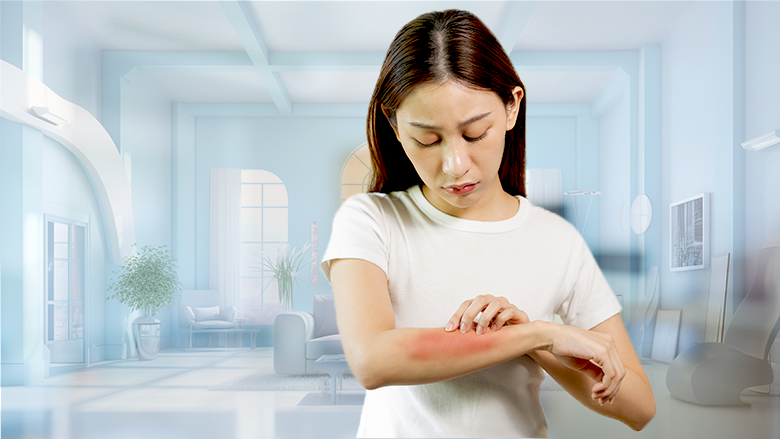
Psoriasis affects people differently and can appear on various parts of the body, like the scalp, elbows, knees, and lower back. The exact cause of psoriasis isn’t known, but it is related to problems with the immune system, where the body’s defenses attack healthy skin cells by mistake. It is not contagious, so you cannot catch it from someone else. Treatments can help manage the symptoms, but there is no cure. Here are the types of Psoriasis:
Plaque Psoriasis: This is the most common type. It causes dry, raised, red skin patches (plaques) covered with silvery scales. These patches usually appear on the elbows, knees, lower back, and scalp.
Guttate Psoriasis: This type is more common in children and young adults. It usually appears after a bacterial infection like strep throat. It causes small, water-drop-shaped, scaling spots on the trunk, arms, legs, and scalp.
Inverse Psoriasis: This type causes bright red, shiny lesions that appear in skin folds, such as under the breasts, in the groin, or around the buttocks. It is more common in overweight people and can worsen with friction and sweating.
Pustular Psoriasis: This rare type causes pus-filled blisters (pustules) surrounded by red skin. It can occur in widespread patches or in smaller areas on your palms or soles.
Erythrodermic Psoriasis: This is the least common type but very severe. It covers the entire body with a red, peeling rash that can itch or burn intensely. It can be life-threatening and requires immediate medical attention.