

Stem Cell Treatment of Spinal Muscular Atrophy in India
Neurodisorders

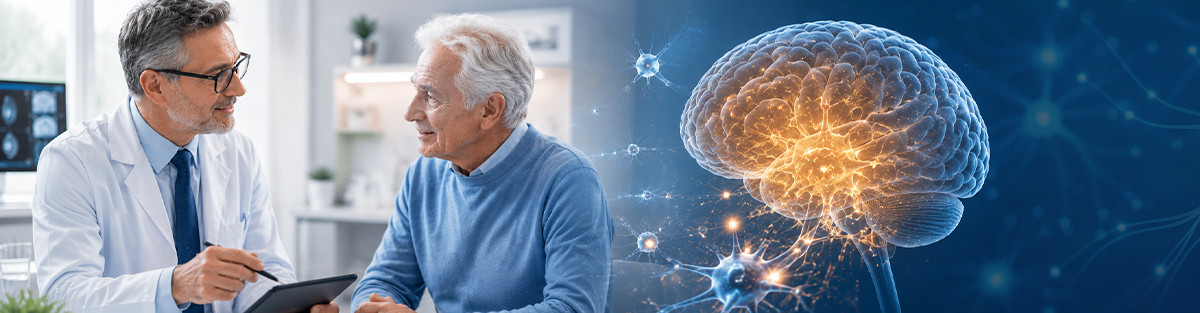
Expert Answer: According to current literature, there is some study on the use of stem cells in Alzheimer’s disease due to their neuroprotective effects and ability to regulate neuroinflammation. There have been studies conducted on synaptic repair processes as well. The involvement of stem cells in cognitive preservation is a relatively new and emerging field of study with limited clinical information. Personalization is key, and all decisions should be made following a full neurological assessment.
Alzheimer’s disease or AD is a severe form of dementia causing a steady memory loss and speech problems and ability to perform daily activities. It gets worse over time, but how quickly this happens varies. The changes in the brain due to the loss of chemical messengers in the brain, called neurotransmitters, that allows nerve cells in the brain to communicate properly are reasons behind the deterioration.
People with AD have two things in the brain that are not normal: amyloid plaques and neurofibrillary tangles. Experts are yet unsure about the presence of these two things as the side effects or part of the cause. The situation of people suffering from AD worsens with time.
Named after the doctor who first described it (Alois Alzheimer), this physical condition affects the brain. There are more than 520,000 people in the United Kingdom alone with Alzheimer’s disease. During the course of the disease, proteins build up in the brain to form structures called ‘plaques’ and ‘tangles’. This leads to the loss of connections between nerve cells, and eventually to the death of nerve cells and loss of brain tissue.
Those with Alzheimer’s also have shortfall of some important chemicals in their brain. These chemicals act as messengers that help to transmit signals around the brain. When there is a shortage of these chemical messengers, the signals are not transmitted as effectively as it should be. Current treatments for Alzheimer’s disease can help boost the levels of chemical messengers in the brain, which can help with some of the symptoms. Stem cell therapies have emerged to be an effective treatment method for Alzheimer.
Do you know about Alzheimer’s Disease?
Alzheimer’s syndrome is a brain disease that causes people to lose their memories. People have a hard time recalling recent events at first, but they can recall events from years past with ease.
Other signs can occur as time goes by, such as:
Getting trouble thinking
Having difficulty in everyday tasks
Feeling befuddled or irritated, especially late at night
Mood swings that are extreme — anger, anxiety, and depression
Feeling disoriented and quickly getting lost
Physical issues, such as a strange walk or a lack of balance
Communication issues
Alzheimer’s patients can lose track of their loved ones. They will lose their ability to dress themselves, eat, and use the restroom.
The disorder allows the brain tissue to deteriorate over time. It typically affects people above the age of 65.
Alzheimer’s disease may affect an individual for a few years or even decades. People, on the other hand, are more likely to stick with it for around 9 years. The disorder affects around 1 in every 8 people over the age of 65. It is more common in women than in men.
Alzheimer’s disease is a degenerative neurological disorder that results in the loss of memory, cognitive skills, and changes in the individual’s behavior. At first, the signs may be committing to memory, confusing, and having trouble doing tasks that one is already familiar with. Later on, the patients can also suffer from lack of orientation, change of mood, impaired judgment, and difficulty in talking. Identifying such signs at the very beginning is vital in getting medical help on time, taking proper medication, and living in good conditions.
One of the most common and tragic diseases of old age is Alzheimer’s disease, which increasingly affects memory, thinking, and behavior over time. Scientists are still not able to point to a single cause, but a combination of age, genetics, and lifestyle factors is the most likely to play a major role. The following are some of the causes that lead to a higher risk of Alzheimer’s disease:
As the most significant risk point for Alzheimer’s disease, growing older is the main factor why most people with this disease are over 65 years old. With aging, the brain gets less and less capable of self-repair, and nerve cells are more likely to be damaged or even die. The natural elderly processes may eventually lead the brain to memory loss and other changes relating to Alzheimer’s.
A person with a close relative (parent, brother or sister) that has Alzheimer’s disease is more likely to get the disease him/herself. The shared genetic background and lifestyle habits of the family members may both contribute to brain health and in turn affect the risk of Alzheimer’s disease. It is, however, the case that a hereditary factor only increases the risk not that someone will undoubtedly get the condition.
Studies have identified the gene that can cause Alzheimer’s as a major risk factor and the one that is most researched is APOE ε4. Those individuals that have this gene variant are more likely to suffer from Alzheimer’s in their senior years. There are a few rare hereditary mutations that may lead to very early Alzheimer’s before the age of 60, but this situation is rare.
Alzheimer’s disease can be caused by serious and/or repetitive blows to the head, the mechanism being that trauma injures the cells, and causes chronic structural and functional changes in the brain. You can avoid such a situation and thereby lower the risk of the disease with helmet use and other measures against head injury.
Alzheimer’s disease protein deposits, amyloid plaques and tau tangles become the dominant brain proteins that glue less and less cells to be had but eventually the last ones die. The two proteins cut off the normal communication route between brain cells before the infected ones die in the end. Besides, illnesses like high blood pressure, diabetes, overweight, and heart problems may increase the risk by hindering blood and oxygen supply to the brain.
Alzheimer’s disease is classified into two variants as follows:
The doctor will do a physical examination to find out the physical problems. A functional status exam followed by mental health assessment will be performed.
Blood tests to be done may include
Other tests may include
Alzheimer’s disease is one of the harmful diseases that can influence your life. But now, you don’t have to worry about it because there is a treatment called stem cell therapy. Stem cell therapy uses special cells which are stem cells. These cells can be found inside the body of the patient. Stem cells have the ability to evolve into various kinds of brain cells and can eventually be used to fix or replace the nerve cells that have been damaged due to Alzheimer’s. Researchers are hopeful that this therapy can have a positive effect on memory, cognition, and general brain function.
Besides, it is assumed to cool the inflammation and slow down the progression of the disorder. Presently, only preliminary research has been done, but the outcomes of experiments on cells and animals, as well as some clinical trials, are positive. There is still a long way to go before stem cell therapy can be confidently considered a safe and viable treatment option for Alzheimer’s patients.
Alzheimer’s is a disease that leads to cell death in the brain, ultimately resulting in memory loss, confusion, and trouble thinking. With their unique capability, stem cells can turn into any cell, i.e., nerve cells, making them a potential cure for such a disease. The therapy achieves this through:
Stem cells can be taken from bone marrow, umbilical cord blood, or even cells that are grown in a lab. These cells are picked based on the criteria that they must be able to develop into brain cells.
Stem cells that have been taken are purified, tested, and made up in packets under very strict medical conditions. It guarantees that the cell is safe, virus-free, and in good health, and it is also patient-ready.
Stem cells can be injected into a person’s blood or they can be put inside a person’s brain using a very precise procedure. The newly introduced stem cells are free to move to the part of the brain that has been damaged.
Stem cells in the brain may be able to make new neurons for the brain and help the healing of the area of the brain that is injured. Also, they support the process of making new links between neurons.
Stem cells are able to quiet brain swelling by providing the brain with mediators that are anti-inflammatory and also, these friendly mediators keep the healthy cells away from further injury. These advance brain function and have a detoxifying effect on the brain disease process.
Once the therapy is in place, through diagnostic imaging and cognitive evaluation, the doctors keep tabs on the patient’s progress closely. Some patients improve memory, learning, and daily functioning through the long haul.
Stem Cell Care India Treatment Procedure
Day 1-
Day 2-
Day 3-
Note:
Stem cell implantation in the brain has the primary objective of mending or substituting the impaired cells and elevating brain function. The researchers are exploring various methods of introducing stem cells into the body to eventually reach the brain and initiate repair. The following are the routes of stem cell implantation oftaken in Alzheimer’s treatment:
In this procedure, stem cells are injected into a patient’s vein, a vein in the arm is most likely the choice. The cells go through the blood circulation and locate the brain. The technique is the easiest and the least invasive one. The cells conditioned to travel to the brain are few, but the effect on the reduction of inflammation and general brain health turn out to be very good.
On this occasion, stem cells come from direct spinal fluid injection via a lumbar puncture in the lower back. The cells are able to get to the brain and spinal cord faster and easier. This technique is far more efficient compared to intravenous delivery when it comes to the central nervous system.
This is a method in which stem cells are injected into the muscles. The cells then gradually secrete healing agents into the blood which may have an anti-inflammatory effect and support brain function in the long run.
One can find stem cells being directly injected into an artery that brings blood to the brain. With this method, more cells can reach the area that needs treatment in a matter of minutes. The medical staff, however, must be diligent in checking for any obstruction or side effects that might come along with it.
In a Microcosmic procedure as this one, stem cells are infused beneath the skin of a patient. The cells produce growth factors and healing molecules that may help the brain repair indirectly.
It is a special method where veins that are narrowed are opened to increase blood flow to the brain before or while stem cell therapy is being done. With improved circulation, the stem cells can get to the brain much more efficiently.
Alzheimer’s could be a severe style of insanity, a form of a nervous disorder increasingly damaging memory and thinking skills. The person will eventually lose its independence even for day to day activities.
A person together with his early sickness biological process stage could realize issue in basic cognitive process things; he will raise constant queries once more and once more, have bother managing finances, taking longer than traditional to end daily tasks. An individual may additionally face issue to find the proper words in his speech, impaired reasoning or faultfinding skills. He or she could still expertise mood swings or temperament changes.
Except for a rare style of Alzheimer, known as early onset familial Alzheimers alternative varieties of diseases square measure non genetic. Genetic mutations square measure connected with the kind of associate degree Alzheimer, whereas others square measure directly connected with environmental factors and traumatic scenario long-faced by the body.
The only thanks to diagnose a sickness are to search out whether or not plaques and tangles square measure gift within the section of the brain. To appear into the tissue, the doctor should perform brain diagnostic check or brain autopsy test, associate degree examination of the brain done once the person dies. Once the person is alive, the identification is totally dependent upon the likelihood or likelihood through examination of general health, past medical issues, case history, asking questions about temperament changes, memory tests, language skills, downside determination capability, and attention.
Although the time from identification to death varied from person to person, it may be as very little as three to five years for the person on top of eighty years mature. For younger patients time could vary between 7-10 years.
Stem cells help by targeting damaged brain areas and reducing inflammation. They can also promote the repair of nerve cells and improve communication between brain cells. Over time, this may support better memory and cognitive function.
The treatment usually involves injecting stem cells through an intravenous (IV) infusion or directly near affected brain regions. The method used depends on the patient’s condition and the clinic’s protocol.
Stem cells may improve memory but cannot fully reverse Alzheimer’s. They help slow damage and support brain cell repair. Results differ for every patient.
The procedure usually takes a few hours. Recovery is quick. However, follow-up sessions and monitoring are often required for months.
Most patients experience mild fatigue or headache. Serious side effects are rare. Doctors monitor patients closely during and after treatment.
Healthy food, mental exercises, and regular sleep help recovery. Staying active and reducing stress also support brain healing. Family support improves long-term outcomes.
Stem cell repair the brain and body bring to light undergo radical changes by the renewal and repair of the old cells. It aligns to the brain’s own cure procedure and provides to the restoration of the lost functions. After the stem cell therapy, a lot of beneficial changes in the brain functions, its interaction with other parts of the body, and the self-defense mechanisms of the brain can be observed. The therapy not only facilitates the production of new cells but also elevates the general health condition of the brain. Here are some of the major changes that one can experience after stem cell therapy:
MSCs, also known as stromal stem cells, can divide into a variety of different cell types in the body, including bone cells, cartilage, muscle cells, and even neuronal cells. They are mainly present in each person’s bone marrow and remain dormant until called upon to aid in the body’s healing process. They grow old with us, and their number and usefulness diminishes as we get older.
The medical establishment has developed the ability to replace a person’s stem cell count by transplantation with younger, highly capable cells by sourcing mesenchymal stem cells (MSCs) from donated cord tissue and extending them to larger numbers.
In a 2014 study titled Alzheimer’s Disease and Stem Cell Therapy, Sung S. Choi and colleagues stated that
“Stem cells have beneficial benefits by allowing cells and tissues to regenerate and replace themselves. The therapeutic potential of stem cells can be divided into two categories. The first is to activate endogenous stem cells, and the second is to use stem cell transplantation to regenerate wounded cells or tissues.” (3) If you’re looking for a Alzheimer’s patients’ functional rehabilitation can be aided by stem cells.
Choi continues to claim that stem cell transplantation has improved cognitive healing in Alzheimer’s patients. In vitro, Mesenchymal Stem Cells (MSCs) have been shown to facilitate longevity, improve metabolic function, and aid in the rescue of the AD cell model.
In AD mouse models, Chi claims that the transplantation of Mesenchymal Stem Cells (MSCs) was able to minimise A deposition, boost memory, and relieve the AD pathology.
The prospect of halting the development of Alzheimer’s disease as well as regenerating weakened neurons, rather than either delaying it or treating symptoms, is what makes stem cell treatment for Alzheimer’s so fascinating.
We focus on providing hope and healing through cutting-edge stem cell therapy. Our assurance rests on three main pillars: science, empathy, and ongoing care. We intend to impact patients and their families in a life-changing way with our safe, morally sound, and efficacious methods of treatment. The following are the commitments we make to every patient who avails of our stem cell therapy program:
Stem cell therapy success rate in India for Alzheimer’s disease is still under research. Several patients have reported significant changes in their memory, concentration, and performing of daily activities after treatment, however, the outcomes differ for each individual. Generally, the therapy yields more results when the disease is at its early or middle stages.
Moreover, the success rate is influenced by the patient’s age, general condition, as well as standard of the medical care. India with its state-of-the-art stem cell units equipped with cutting edge technology and skilled doctors, has become a leading destination for cost-effective and at the same time highly viable Alzheimer’s stem cell treatment options few people can afford in the world.
The success rate of Alzheimer’s disease (AD) stem cell therapy hinges on many crucial factors. Each of these factors has an impact on the effectiveness of the treatment and how much the patient gets better. Here are the main factors that determine the success rate:
The major factor is the kind of stem cells – embryonic, mesenchymal, or induced pluripotent stem cells, for example – that are used. Each one differs in its potential to develop, heal, and substitute the damaged brain cells. The right type of cell use pushes the recovery to the next level.
The stage at which the treatment is applied is of great importance. Usually, those patients who have just begun the disease and undergone therapy will show more improvement than those with advanced stages of the disease. Starting treatment at the earliest possible point means that more neural cells are viable and can be used for repair and growth.
The performance of stem cells is also dependent on whether they are injected into the blood circulation, spinal cord, or brain. The manner of delivery determines the efficiency of cells in reaching the areas that require intervention. The method used for the delivery of the cells determines how well the cells can work together.
The quality, the purity, and the number of stem cells have an effect on the results of the treatment. If the cells are contaminated or weak, the effect will be minimal, but if they are of good quality and in the right amount, the results can be very positive.
The patient’s age, immune capabilities, and overall health condition also contribute to the therapy’s success. Patients with better health status are more likely to show greater cell acceptance and tissue repair.
It is as important as therapy itself. Without continuous care, it will be difficult to see the patient’s progress and deal with any side effects that may occur from the therapy.
Studies have shown that stem cell treatment, though relatively new in the medical field, is safe for use. Many doctors and clinics specializing in this type of treatment are pleased with its usage so far as it shows results and seems to be improving as more studies are being conducted and observations are made. Some of the major advantages of choosing stem cell therapy for Alzheimer’s in Delhi, India as your ideal way of treatment are as follows:
Stem Cell Therapy for Alzheimer’s is dependent on the body’s natural healing ability and it boosts that to recover faster or fight back against the condition. Therefore, what’s better than some natural therapies that can make organic treatment of stem-cell even more effective? So, given below are a few of the supportive therapy for the patient’s administered stem cell treatment for Alzheimer’s disease to achieve the finest results:
Quality control is a very vital part of stem cell therapy. It makes the treatment safe, effective, and reliable to patients. Since this technique comprises of intricate biological materials, every step, be it from cell gathering, or final use, must adhere to stringent quality standards. If not properly managed, such scenarios could lead to a malfunction, contamination, or side effects. Here are some reasons which explain the necessity of quality control in stem cell therapy for AD.
Through quality control, one can be absolutely certain that the stem cells utilized are pure and accurately identified. In case a contamination is present or a mixture with unwanted cells occurs, not only will the effectiveness diminish but reaction types that are usually dangerous may develop. Tests conducted at all levels help ensure only healthy and appropriate cells are given for therapy.
Stem cells are extremely delicate and may become contaminated with bacteria, viruses, and even chemicals if during the handling or storage processes they are not properly done. Therefore rigorous laboratory inspections alongside totally aseptic techniques will result in cells being uninfected safe for patients’ use.
The main function of quality control is to guarantee that standards are met particularly from batch to batch quality of stem cells. Doctors can therefore rely on the resulting homogeneous effect across the different patients as a result of similar treatment product consistency leading to predictable and safe outcomes.
Testing of the cells prior to the treatment stage is an integral part of the process whereby any harmful mutations and genetic changes can be detected quickly followed by unexpected cell behavior. By this step, patient protection from the side effects occurring is ensured and confidence in the treatment process raised.
Quality control ensures that production of stem cells is in line with the set standards from research and medicine. It plays a role in clinics and laboratories being able to observe moral and editorial rules and regulations, which make undergoing treatment more honest and reliable.
Good quality control systems in therapies make patients feel more confident, safe and results attainable. Besides, it helps medical institutions both in India and worldwide to be recognized and stem cell therapy for AD will be able to develop not only efficiently but also in a responsible manner.
Stem cell therapy focuses on repairing damaged brain cells, improving memory, and slowing the disease’s progress. Although the treatment is still under research, several patients have experienced positive changes after receiving stem cell therapy. Below are the key treatment results observed:
We are from Bangladesh. My 53-year-old wife Shazia was detected with Alzheimer’s disease 1.5 years back and it happened so hurriedly and without a care that we all were much traumatized. Several doctors in our nation recommended that she had Alzheimer’s and it is in the initial stage so one of our family physicians recommended us to take her to India for stem cell treatment. I investigated on the internet for the varied centers providing Stem cell treatment for this condition and I happened upon the Stem Cell Care India. After a transitory discussion and consultation with the crew of this centre over a few weeks, we made up our mind to take my wife to this center in India for her stem cell therapy for Alzheimer’s. From day 1 till her last day of treatment, we got gigantic support and attention from the crew of experts in SCCI and after the prosperous treatment we are back in our nation and my wife is under post-therapy chapter and we can see loads of improvement in her situation.
Paul is appreciative and thankful to the entire team of Stem Cell Care India for at least trying to put an end to the disease of Alzheimer’s via stem cell treatment. Mr. Paul from UK is an energetic young professional, who experienced the punitive realities of Alzheimer’s disease and loss of flexibility in a very tough way. More than 8 years ago, Mr. Paul was diagnosed with a disease known as Alzheimer’s. It was a game changer for the whole family that 57 years old amusing and fun-loving individual like Mr. Paul unexpectedly stopped frolicking with his grandchildren, lost his tolerance and is in necessity of relentless support and care. It was truthfully a blessed day when he began probing for potential treatment choices for his condition and reached Stem Cell Care India.
One day, I noticed that my mother began to disremember things. This kept snowballing and we decided to take medical assistance and checked with the doctor. It was then she was spotted with Alzheimer’s disease. During the following months, little by little, the sickness affected her walking until she was eventually confined to a wheelchair. Her walking was faltering due to phantasms and imaginary obstacles. She could only manage some steps, leaning on two persons with bent legs nearly touching the ground. She had lost all sense of restraint. She became enduringly incontinent. During a transitory period of time she did not sleep, even after taking prescription medicine. It was heartbreaking to see my mother going all emotionless and she even began losing a lot of weight.
It was this point which enforced me look into an alternative option. I made the decision to take her for a stem cell treatment even though our doctors, lecturers and even my brother disagreed and discouraged me. When we arrived at the clinic for the stem cell therapy in India, Ciara did nothing but shriek. But the process was well systematized and was speedily implemented. Ciara showed no sign of gigantic pain from the process, which was a respite to us as this implied that she is not hurt from the extraction procedure. During the following months, my mother was recuperating her aptitude to get familiar with her close relatives. She was able to go to the washroom on her own. She had not felt the impulse to go to the bathroom in a long time. At large, we can say that after stem cell therapy, her remembrance has improved regarding day-to-day activities. Her physical capacities have improved. She is walking more securely. She is steadier emotionally as well. To me, these are all optimistic signs of cell regeneration; particularly when I recall my mother`s physical and emotional condition before the treatment.
I was working as a software engineer for more than 22 years before retiring. I was been spotted with Alzheimer’s in 2008 at the age of 52. I have had Alzheimer’s for 10 years. Was taking Atricept and underwent drug therapy as well, which helped to some extent. However, steadily I was losing my aptitude to think openly and remember simple things like names, dates and present-day information. Even identifying my relatives was becoming tough. Life was indeed becoming hard. Then, one day my husband found out about the stem cell treatment for Alzheimer’s.
I had my first course of stem cell therapy at Stem Cell Care India in the beginning of 2016. The process was safe and simple. I did not feel any discomposure or aching during and after the extraction of my bone marrow and adipose tissue. The hospital was high standard and the staff was friendly and very generous. All my doubts were replied to with tolerance and clarity, which made me feel secure. I had my second shot of stem cells 6 months later. After a couple of months, I can see a steady improvement in my condition. My memory improved marginally. I have recollected many skills like dressing, makeup, reading and writing with administration. I am also able to help in small domestic errands and kitchen work. I believe that the stem cell have decelerated the time frame of my deterioration. It has given more time to spend with my family. Thanks to the team of Stem Cell Care India!
In India, a quality certificate for stem cell treatment ensures that the therapy is safe, ethical, and effective. Certified clinics follow strict guidelines set by the Indian Council of Medical Research (ICMR) and use approved laboratory practices. This certification confirms that the stem cells are processed in clean, controlled environments and that qualified doctors perform the procedure. It also checks patient safety, consent, and proper record-keeping. Choosing a clinic with a valid quality certificate helps patients receive trustworthy care, reduces risks, and improves the chances of positive results in stem cell therapy for Alzheimer’s disease. A quality certificate for stem cell therapy usually includes the following:
The follow-up of stem cell treatment for Alzheimer’s disease in India is an important part of patient care. After the therapy, patients are regularly checked by doctors to track their progress and brain function. Follow-up visits include memory tests, physical checkups, and brain scans to see how well the treatment is working. Doctors also monitor for any side effects or health changes. These visits help in adjusting medicines or lifestyle plans if needed. Proper follow-up ensures safety, supports recovery, and helps in improving the quality of life after stem cell therapy.
This process ensures that the patient continues to receive proper care, rehabilitation, and medical guidance. In India, follow-up care is designed to monitor the patient’s physical and mental progress and to make any needed adjustments to treatment plans. Below are the key elements included in the follow-up of stem cell treatment for AD:
Stem Cell Treatments for Neuropathy
Get Stem Cell Therapy for Intellectual Disabilities
Do you know about Amyotrophic Lateral Sclerosi
cell replacement therapy for Parkinson’s disease
muscle transplant muscular dystrophy
mild stroke Stem Cell treatment
A patient must understand that stem cell therapy is an experimental therapy that may fail to work at certain times, before undergoing this treatment procedure. Depending on the patient’s health condition a patient might be refused treatment or the proposed protocol might change at the time of procedure.
At Stem Cell Care India, our primary goal is to provide the best technology available; safety of which has been proven across the world.
As with any medical treatment, we make no guarantees or claims of cures are made as to the extent of the response to treatment. However, the results may vary from patient to patient, even with a similar diagnosis, as the body’s internal status is unique to each individual patient. Due to this fact, we cannot provide, infer or suggest that there is any certainty of a given outcome. Additionally, we do not use embryonic or fetal cells in any of our treatment process.
India is recognized with its stem cell therapy for the various medical conditions which include Alzheimer’s disease. It is a progressive disease of the brain which shows loss of memory and confusion coupled with impaired thought processes. These can be either caused by some abnormal protein deposits, damage to the nerve cells, or sometimes by genetic and lifestyle factors.
In fact, the therapeutic benefits of stem cell therapy lie in controlling the symptoms of Alzheimer’s through neuron repair, diminished inflammation, and the regeneration of brain cells, thereby allowing enhanced cognitive functioning. People from various countries such as Europe, USA, UK, South Africa, UAE, Saudi Arabia, and Thailand. We will talk about some of the reasons that make them choose India as their first preference.
Is India Best For Stem Cell Therapy for Alzheimer’s Disease?
Seeking India for Alzheimer’s disease stem cell therapy will be the one of the best choices of your life. Patients all over the world come to India and get top class stem cell treatment. Advanced medical facilities, experienced specialists, and low costs attract patients from all over the world. Moreover, holistic care and supporting policies for medical tourists make India a popular destination. Key Reasons Why Patients Prefer India:
Choosing India for your Alzheimer’s disease treatment can be a beneficial choice because of the world class care and support. Stem cell therapy for Alzheimer’s disease in India grabs the eye of several patients and provides them better results than conventional treatment.
Intranasal MSC-Derived Exosomes for Alzheimer’s: Amyloid Clearance
Cone AS et al.
https://doi.org/10.1016/j.biomaterials.2021.120960
BM-MSC Transplantation in Alzheimer’s: Neurogenesis and Cognitive Restoration
Kim HJ et al.
Current Alzheimer Research
https://pubmed.ncbi.nlm.nih.gov/24093526/
Neural Stem Cell Transplantation for Cognitive Restoration in AD Models
Ager RR et al.
PNAS
https://doi.org/10.1073/pnas.1509285112
Phase I Trial of UC Blood MSC in Mild Alzheimer’s Disease
Kim HJ et al.
Alzheimer’s & Dementia
https://doi.org/10.1016/j.jalz.2014.11.009
MSC-Derived Exosomes Carrying BDNF for Alzheimer’s: Synaptic Rescue
Yang J et al.
Journal of Controlled Release
https://doi.org/10.1016/j.jconrel.2020.06.003
iPSC-Derived Cholinergic Neuron Transplantation for Alzheimer’s
Liu Y et al.
Cell Stem Cell
https://doi.org/10.1016/j.stem.2013.06.014
Neuroinflammation Resolution by MSC-Secretome in Alzheimer’s
Patel NA et al.
Stem Cell Reviews and Reports
https://doi.org/10.1007/s12015-018-9833-4
Adipose MSC Transplantation Reduces Tau Phosphorylation in AD Models
Yan Y et al.
Stem Cell Research & Therapy
https://doi.org/10.1186/s13287-018-1091-9
Intravenous MSC for AD: Safety and Preliminary Efficacy — Phase I
Cha MY et al.
Alzheimer’s Research & Therapy
https://doi.org/10.1186/s13195-020-00613-6
Exosome miRNA Transfer from MSC to Neurons in Alzheimer’s Neuroprotection
Bhaskaran M et al.
Journal of Extracellular Vesicles
https://doi.org/10.1002/jev2.12115
Stem Cell Treatment for alzheimers disease, Stem Cell Therapy for alzheimers disease in India, Stem Cell Therapy for alzheimers disease Cost in India, Affordable Stem Cell Therapy for alzheimers disease in India, Low Cost Stem Cell Therapy for alzheimers disease in India, Price of Stem Cell Therapy alzheimers disease in India, stem cell treatment for alzheimers disease in Delhi, stem cell treatment for alzheimers disease in India, stem cell Hospital for alzheimers disease in Delhi, stem cell Hospital for alzheimers disease in India
Conclusion:
Alzheimer’s disease is a serious condition that affects brain function. It causes memory loss, confusion, and problems with speech and movement. The disease worsens slowly over time, affecting everyday life deeply. People may forget names, faces, or even simple daily tasks.
The brain changes due to plaques and tangles that block signals. These blockages lead to nerve cell damage and brain tissue loss. Chemical messengers in the brain also decrease over time. This makes communication between brain cells weak and unbalanced.
There is no permanent cure for Alzheimer’s disease yet. However, treatments can help manage symptoms and improve daily life. Medicines may increase brain chemicals and support better mental function. Stem cell therapy is also being studied for new hope. It may repair damaged cells and slow down the disease.
Support from family, caregivers, and doctors plays a key role. A healthy lifestyle, brain exercises, and balanced food help too. Early diagnosis and treatment can make a big difference. With the right care, people with Alzheimer’s can live better and longer. Continued research and medical advancements bring new hope for the future. Each step forward helps bring us closer to better understanding and care.
Treatment Disclaimer:
We provide consultation, case evaluation, and patient support services in the field of regenerative medicine. As per current medical guidelines in India, stem cell-based interventions (other than approved indications) are considered investigational and are available only within regulated clinical research settings. For patients exploring broader options, we also assist in facilitating access to treatment pathways, including internationally accredited centers where different regulatory frameworks may apply.

Beyond neurological care — exploring holistic treatments for a better quality of life.
Our Experts Are Available To Answer All Your Questions.
Discover how stem cell therapy is making a difference in a wide range of diseases and helping patients lead healthier, better lives.




Explore our Clinical Research Hub for scientific publications, treatment evidence, and ongoing regenerative medicine research.
Content authored and reviewed by qualified members of our medical team | Last updated: 11 August 2026