


Skip to content
01
02
03
04
05
06
07
08
09
10
11
Watch
On Stem Cell Care India



Quick answer
The procedure involved in stem cell therapy entails the pre-assessment of the patient before treatment, review of the diagnosis, selection and preparation of the cells for use, and administration through the proper delivery pathway, followed by post-treatment monitoring of the patient. Rehabilitation therapies are incorporated in all phases of the procedure. The protocols are customized depending on the patient's diagnosis and health condition.
Stem Cell Therapy Protocol — Quick Facts
| Aspect | What to expect |
|---|---|
| Cell type used | Human umbilical cord tissue–derived mesenchymal stem cells (hUC-MSCs), cultured and expanded in GMP labs |
| Infusion duration | About 2–3 hours, given by manual IV by a certified medical team |
| Location | New Delhi, India — international and domestic patients welcome |
| Lab accreditation | cGMP compliant, ISO 9001 and ISO 13485 certified partner laboratory |
| Typical stay | 3-day treatment procedure (see day-by-day below) |
On this page — 11 topics
Therapy Protocol
Next-gen therapy using human umbilical cord tissue MSCs (Mesenchymal Stem Cells).
At Stem Cell Care India (SCCI), we offer next-gen therapy with human umbilical cord tissue MSC (Mesenchymal Stem Cells) derived. These are cells that have been cultured and expanded in our GMP labs so that they are safe, pure, and top quality. Our treatment is designed to relieve symptoms naturally, decrease the inflammatory process in the body, and sustain good health in the long run.
We additionally maintain global standards and allow no deviation from them throughout our entire process from start to finish, including experimental procedures, clinical trials, treatment, and follow-up. We do not compromise safety, efficacy, and thoroughness in our research as the foundation of the therapy that we offer to patients as a reasonable solution to their various health problems and a possible means to their general well-being improvement.
The treatment process includes:
- Cord tissue-derived mesenchymal (live) stem cells administered systemically.
- IV vitamin therapy: to make sure the body is hydrated and completely equipped for treatment.
- Detox procedure: we guide you through the pre-treatment detox procedure so as to formulate your body for optimum stem cell activation.
- Stem cell activation therapies: a musculoskeletal evaluation, followed by acupuncture, physiotherapy, and chiropractic treatment. Lymphatic drainage massage is also used.
- Cell activation supplements: a 2-month supply of cell activation supplements — an all-natural supplement intended to increase stem cell efficiency after treatment.
01Intelligent Aging
Topic 01 of 11Skip ahead: Degenerative Condition
Mesenchymal stem cells from human umbilical cord tissue and the aging process.
Mesenchymal Stem Cells have the potential to slow down the aging process and can be derived from human umbilical cord tissues. Patients can get relief from systemic inflammation because of the anti-inflammatory properties they have. Additionally, MSCs are really good at fixing and making damaged tissues healthy again — important for fighting against getting old and worn out. Individuals can enhance their overall health and live a happy life with the help of these stem cells because they combine tissue repair and anti-inflammatory properties.
02Degenerative Condition
Topic 02 of 11Skip ahead: Protocol Overview
How MSCs may help make degenerative conditions better.
Stem cells from human umbilical cords, called MSCs, seem to help make degenerative conditions better. Their strength is in how they can control the immune system, which helps to lower long-lasting swelling that often makes diseases that get worse over time even worse. MSCs help the body's defense system work better, which slows down how bad these conditions get. They can also heal themselves — when they get hurt, the body can fix the damage and make it better.
With the combination of supporting the immune system, reducing inflammation, and fixing tissues, this approach might slow down how fast degenerative diseases get worse. It's a new way to try to handle these problems.
03Protocol Overview
Topic 03 of 11Skip ahead: Methods of Delivering Stem Cells
Our approved regenerative plan uses millions of lab-grown MSCs from ethically sourced umbilical cords.
- Infusion duration: About 2–3 hours
- Method: Given through a manual IV by a certified medical team
- Location: New Delhi, India
- Patients: Both international and domestic patients are welcome to receive this treatment
04Methods of Delivering Stem Cells
Topic 04 of 11Skip ahead: Kind of Stem Cells Administered
Several delivery routes are used to help cells stay healthier and make treatments work better.
Intravenous Injection
Stem cells are delivered directly into the bloodstream, allowing for widespread distribution throughout the body, reaching various organs and tissues.
Retrobulbar Injection
Administering stem cells behind the eye can target ocular conditions directly, offering localized treatment for diseases like retinal degeneration.
Intrathecal Injection
Stem cells are injected into the spinal canal, providing therapeutic effects for neurological disorders by targeting the central nervous system.
Intramuscular Injection
Direct delivery into muscles enables the treatment of musculoskeletal disorders and facilitates the regeneration of damaged tissue.
Have a question about your own case?Share your medical reports for a free, doctor-reviewed opinion — no obligation.
Intradermal Administration
Stem cells are injected into the skin, promoting skin rejuvenation and aiding in wound healing processes.
Liberation Angioplasty
Utilized in treating conditions like multiple sclerosis, stem cells are introduced through catheterization, improving blood flow and reducing inflammation.
Intra-Arterial Injection
Stem cells are injected into specific arteries to target diseases like peripheral artery disease or stroke, promoting tissue repair and regeneration.
05Kind of Stem Cells Administered
Topic 05 of 11Skip ahead: 3-Day Treatment Procedure
Ethically obtained from certified, full-term human umbilical cords.
SCCI uses cord tissue-derived mesenchymal stem cells ethically obtained from certified, full-term human umbilical cords. These cells aren't a blood product, consequently it is tremendously safe and does not necessitate HLA or phenotypic matching. Mesenchymal stem cells have the aptitude to:
- Decrease inflammation
- Modulate the immune system
- Arouse tissue regeneration
063-Day Treatment Procedure
Topic 06 of 11Skip ahead: Validation & Test of Viability
Stem Cell Care India provides a 3-day procedure for patients travelling for treatment.
- Day 1: Airport pick up; various sessions with the doctor, including discussing your condition; admitting the patient; taking supportive therapies.
- Day 2: Beginning of treatment; doctor provides supportive therapy; counseling session.
- Day 3: Involvement in physiotherapy sessions; important paperwork will be done; drop-off at the airport by our transportation service.
Where Our Cells Come From
A fully registered, certified partner medical laboratory.
SCCI is affiliated with an esteemed medical laboratory which is completely registered, cGMP compliant, ISO 9001, and ISO 13485 certified.
Cell Product
The mesenchymal stem cells which we use in our treatments are derived from the human body using allogeneic or autologous procedures. All of our cells are expanded using safe and standard protocols and are then flown overnight in sub-zero CryoPort™ containers straight to our clinic for treatment. To help ensure maximum treatment efficiency, all of our cells are ISCT tested for sustainability before usage. Following cGMP rules closely makes sure our mesenchymal stem cell product is exactly what it's supposed to be — strong, high-quality, and pure.
07Validation & Test of Viability
Topic 07 of 11Skip ahead: Unrestricted Advantage
Checking that cells used in treatment are alive, healthy, and working well.
Researchers do viability tests to find out that the cells used in the treatment are dead or alive. It checks if cells are healthy, working well, and in good condition. The benchmark of viability in our partner's lab is higher than most labs.
We make sure that our treatments keep cells alive and healthy. This not only follows all the required quality standards and rules but also makes sure that our treatments work well by preventing poor handling or low quality. Our automated cell counters allow us to quickly and reliably count and evaluate MSCs every time. With these advanced tools, we can tell if cells are alive or dead, count the total and live cells, and check our counts using built-in imaging.
08Unrestricted Advantage
Topic 08 of 11Skip ahead: Clinical Trials and Further Research
Why human umbilical cord tissue–derived MSCs can avoid immune attack.
Human umbilical cord tissue-derived mesenchymal stem cells (hUC-MSCs) can avoid being attacked by the immune system. This means they can be used for transplants from one person to another without causing harmful immune reactions.
These properties are mainly because they have low levels of MHC class I molecules and no MHC class II molecules on their surface. This helps MSCs avoid being noticed by CD4+ T cells and stops T cell activation. Patients undergoing MSC therapy do not experience DNA transfer or propagation from MSCs themselves. Horizontal DNA transfer is not thought to occur based on the brief survival of infused MSCs, the absence of genomic integration of designed transgenes, and the paracrine methods of action.
09Clinical Trials and Further Research
Topic 09 of 11Skip ahead: Successive Results
Working with research centers, scientists, and review boards.
Stem Cell Care India works with well-known research centers, leading scientists, and review boards to ensure our carefully designed stem cell treatment plans are effective. We learn a lot about how stem cells help people by doing studies that patients contribute to. These studies look at how stem cells work in humans and how they fight inflammation. We also do tests with stem cells in living things to find out more about their benefits for our health.
Our research, which was approved by a special committee, could help people with different diseases. It also helps us learn more about fixing bodies with stem cells.
10Successive Results
Topic 10 of 11Skip ahead: Safety and Regulations in Our Clinic
Measuring changes in signs of inflammation and patient-reported vitality.
The study measures changes in special signs of inflammation along with the information people give in vitality questionnaires called PAR-Q. How a patient reacts depends on many things inside their body, but it's also influenced by how they live and what they do.
People who stick to exercising, eating healthy foods that reduce inflammation, and avoid drinking alcohol, smoking, and too much caffeine can keep feeling better for over 4 years, depending on their condition. Most patients have said they don't show much decline up to 48 months after the treatment, and they hardly ever go back to how they were before the treatment. Our team checks in with patients over subsequent years after treatment to gather information about how well the treatment worked.
11Safety and Regulations in Our Clinic
Topic 11 of 11
Careful work at every stage to keep patients safe.
Even though MSCs are very safe, we still do a lot of careful work when we make them, check them, give them to patients, and watch over the patients. This helps keep patients safe.
MSCs are one of the best ways to treat many medical conditions because they have the regenerative potential to restore damaged cells with new ones. But, to optimize the cells and use their full potential, many clinical trials are still in progress, which is why safety and regulation is needed to make it more safe and effective for patients.
Want the science explained for your specific case?
Send your diagnosis and reports and our medical team will explain how the research applies to you — free, no obligation.
Related Videos
More videos from the Stem Cell Care India team and our patients.
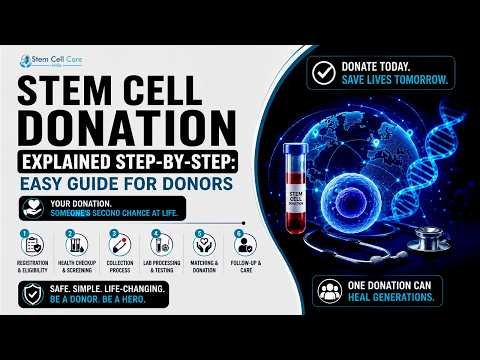
Stem Cell Donation Explained Step-by-Step | Easy Guide for Donors | Life-Saving Procedure 2026
Exosome Therapy for Muscular Dystrophy | A Step Towards Regeneration
World Glaucoma Day | A Step Towards Better Vision with Stem Cell Care India
🌍💚 World Kidney Day: A Step Towards Better Kidney Health | Stem Cells
Watch
4 ShortsQuick Video Answers: How Stem Cell Treatment Works
Short vertical videos from our YouTube channel on how stem cell treatment works.
Autologous vs Allogeneic Stem Cells — Which Type Does Stem Cell Care India Use and Why
Watch on YouTubeCell Viability vs Raw Cell Count — The Quality Metric Most Clinics Never Mention
Watch on YouTubeIV infusion vs intrathecal vs local injection — how the delivery route is chosen for each patient…
Watch on YouTubeAutologous vs. Allogeneic Stem Cells: Which Is Right for Which Condition?
Watch on YouTubeBrowse all Stem Cell Care India Shorts
Educational content only. Patient stories are individual experiences; results vary from person to person and are not a promise of outcome or a substitute for advice from your treating doctor.
Frequently Asked Questions
Straight answers to what people usually ask about our treatment protocol.
What Does a Standard Stem Cell Therapy Protocol Involve From Evaluation to Administration?+
The procedure involved in stem cell therapy entails the pre-assessment of the patient before treatment, review of the diagnosis, selection and preparation of the cells for use, and administration through the proper delivery pathway, followed by post-treatment monitoring of the patient. Rehabilitation therapies are incorporated in all phases of the procedure. The protocols are customized depending on the patient's diagnosis and health condition.
What is the first step in the stem cell therapy protocol?+
The first step is a free medical evaluation, where your medical history and condition are reviewed to confirm suitability.
How long does the full protocol take?+
Timelines vary by condition and the cell source used, typically ranging from a few days to a few weeks for cell processing, plus the evaluation and follow-up periods.
Is the treatment done in one visit?+
This depends on the case. Some protocols involve a single collection-and-treatment visit; others may require cells to be expanded first, which can involve a return visit.
Who decides my specific treatment plan?+
Your treatment plan is decided by the clinical team based on your medical evaluation, condition, and the cell source best suited to your case.
Is hospitalization required?+
Administration is typically an outpatient clinic procedure and does not usually require a hospital stay.
What happens during follow-up appointments?+
Follow-up appointments monitor progress and allow the clinical team to adjust guidance.
Does the protocol guarantee a specific result?+
No, the protocol is designed to ensure safety, quality, and consistency — it does not guarantee a specific outcome.
Do patients ask about exosome therapy for Retinal Detachment when researching the stem cell therapy protocol?+
Some do. Patients reading about the step-by-step treatment protocol sometimes also ask about Exosome Therapy for Retinal Detachment, since vision loss from a detached retina is one area where exosome-based options are considered alongside standard protocols.
How does the stem cell therapy protocol connect to exosome therapy for Retinopathy?+
They're related but distinct. This page covers the step-by-step treatment protocol, while Exosome Therapy for Retinopathy is a condition-specific treatment page for patients dealing with retinal blood-vessel damage, often diabetes-related; the clinical team can advise on how the two fit together.
Can I read about exosome therapy for Diabetic Neuropathy here?+
This page focuses on the step-by-step treatment protocol, not on any one condition. For nerve pain and numbness from diabetes, see the dedicated Exosome Therapy for Diabetic Neuropathy page.
Is the stem cell therapy protocol relevant to exosome therapy for Muscular Dystrophy?+
It can be. Exosome Therapy for Muscular Dystrophy is a separate regenerative option some patients researching progressive muscle weakness look into alongside the stem cell therapy protocol, assessed case-by-case during a free medical evaluation.
Do patients ask about exosome therapy for Osteoporosis when researching the stem cell therapy protocol?+
Some do. Patients reading about the step-by-step treatment protocol sometimes also ask about Exosome Therapy for Osteoporosis, since low bone density and fracture risk is one area where exosome-based options are considered alongside standard protocols.
How does the stem cell therapy protocol connect to exosome therapy for Parkinson’s Disease?+
They're related but distinct. This page covers the step-by-step treatment protocol, while Exosome Therapy for Parkinson’s Disease is a condition-specific treatment page for patients dealing with tremor, rigidity, and movement symptoms; the clinical team can advise on how the two fit together.
Can I read about exosome therapy for Rheumatoid Arthritis here?+
This page focuses on the step-by-step treatment protocol, not on any one condition. For autoimmune joint inflammation, see the dedicated Exosome Therapy for Rheumatoid Arthritis page.
Is the stem cell therapy protocol relevant to exosome therapy for Sciatic Nerve Injury & Sciatica?+
It can be. Exosome Therapy for Sciatic Nerve Injury & Sciatica is a separate regenerative option some patients researching sciatic nerve pain radiating down the leg look into alongside the stem cell therapy protocol, assessed case-by-case during a free medical evaluation.
Do patients ask about exosome therapy for Shoulder Injury when researching the stem cell therapy protocol?+
Some do. Patients reading about the step-by-step treatment protocol sometimes also ask about Exosome Therapy for Shoulder Injury, since rotator cuff and shoulder joint damage is one area where exosome-based options are considered alongside standard protocols.
How does the stem cell therapy protocol connect to exosome therapy for Spinal Cord Injury?+
They're related but distinct. This page covers the step-by-step treatment protocol, while Exosome Therapy for Spinal Cord Injury is a condition-specific treatment page for patients dealing with loss of motor or sensory function after cord damage; the clinical team can advise on how the two fit together.
Can I read about exosome therapy for Spinal Muscular Atrophy here?+
This page focuses on the step-by-step treatment protocol, not on any one condition. For motor-neuron loss and progressive weakness in SMA, see the dedicated Exosome Therapy for Spinal Muscular Atrophy page.
Is the stem cell therapy protocol relevant to exosome therapy for Sports Injuries?+
It can be. Exosome Therapy for Sports Injuries is a separate regenerative option some patients researching soft-tissue and joint injuries from athletic activity look into alongside the stem cell therapy protocol, assessed case-by-case during a free medical evaluation.
Do patients ask about exosome therapy for Systemic Lupus when researching the stem cell therapy protocol?+
Some do. Patients reading about the step-by-step treatment protocol sometimes also ask about Exosome Therapy for Systemic Lupus, since autoimmune inflammation affecting multiple organs is one area where exosome-based options are considered alongside standard protocols.
How does the stem cell therapy protocol connect to exosome therapy for Wound Healing?+
They're related but distinct. This page covers the step-by-step treatment protocol, while Exosome Therapy for Wound Healing is a condition-specific treatment page for patients dealing with slow-healing or chronic wounds; the clinical team can advise on how the two fit together.
See also:Stem cell processingSafety & risksHow stem cell therapy worksFull FAQ
Continue Exploring
Related reading, picked for this page.
FAQ
Enrolment Step
Enrolment step stem cell therapy.
Read more Stem Cell TherapyStem Cell Treatment Flow Chart: The Patient…
Stem cell treatment flow chart.
Read more ScienceSupporting Your Body's Response to Stem Cell Therapy
Science.
Read more ResourceFrequently Asked Questions About Stem Cell Therapy…
Frequently asked questions.
Read more About UsAbout Stem Cell Care India: Our Story, Team &…
About Us.
Read more Get StartedAppointment
Book appointment stem cell care India.
Read moreAbout this guide: This page is written, reviewed, and medically approved as credited above. Content reflects the investigational status of stem cell and exosome applications under India's National Ethical Guidelines for Biomedical and Health Research (ICMR, 2017) and is not a substitute for individualized medical advice. See our full treatment disclaimer for details.
Keep exploringEnrolment StepStem Cell Treatment Flow Chart: The Patient Journey, Step by StepFunctional Medical Therapies: A Whole-Person Approach
Explore related topics
More depth on the subjects covered in this guide.
How Stem Cell Therapy Works
The mechanism behind the protocol.
Production of Stem Cells
How the cells in your protocol are made.
How to Choose the Right Cells
How the cell source is decided.
Boosting Stem Cell Therapy
Supporting your recovery after treatment.
Stem Cell Therapy Safety & Risks
What to know before you begin.
Still have a question?
Every case is different. A free medical evaluation gets you a direct, physician-reviewed answer for your specific condition — typically reviewed within about 7 working days.
Keep reading
Articles You May Interest
Watch
Related Videos


Ready to take the next step?
Talk to a case coordinator about your specific condition and treatment options.
24–48hFrom sending your reports to a doctor-reviewed answer
10,000+Patients treated across 65+ countries
4.9 / 5From 196+ verified Google reviews
Sources & Further Reading
Independent public sources for checking the evidence yourself. The PubMed and ClinicalTrials.gov links open live database searches, so results update as new research is published. Listing a source here is not an endorsement of any treatment.