Table of Contents
- Key Takeaways
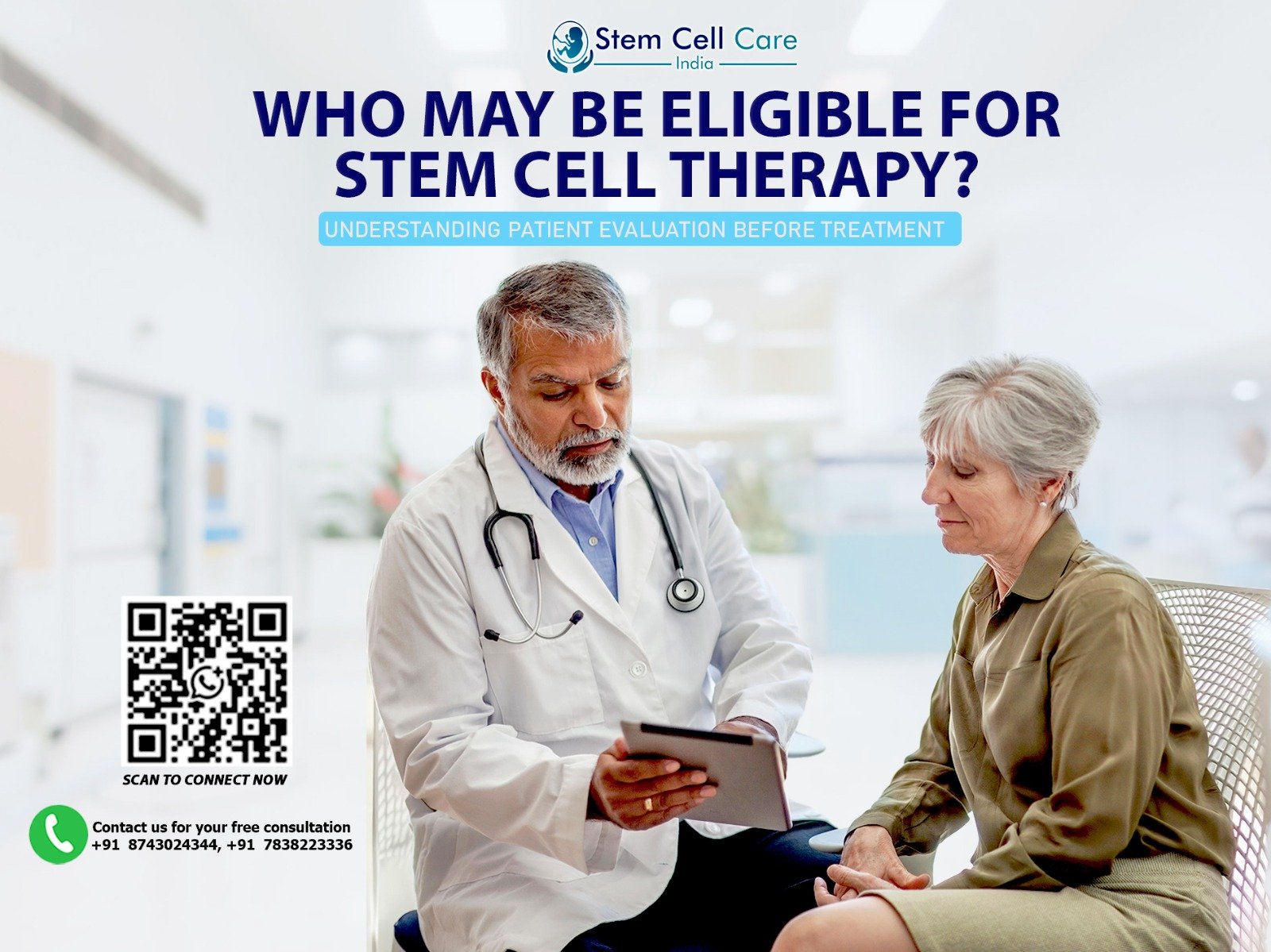
- Who May Be Eligible for Stem Cell Therapy? Understanding Patient Evaluation Before Treatment
- How Do Healthcare Professionals Evaluate Patient Eligibility?
- Does Having a Diagnosis Automatically Make Someone Eligible?
- What Happens During a Stem Cell Eligibility Assessment?
- Why Is Personalised Evaluation More Important Than a Standard Eligibility Checklist?
- Can Eligibility Change Over Time?
- Looking Ahead
- Frequently Asked Questions
- Reference Links
Determining your eligibility for stem cell therapy cannot be measured by a single factor or medical condition. Healthcare professionals often evaluate a patient’s diagnosis, overall health, medical history, treatment goals, and the level of available scientific evidence before considering whether a stem cell-based approach may be suitable or not. Since every patient is different, a comprehensive medical assessment plays an important role in developing an individualised treatment plan.
Key Takeaways
- Eligibility for stem cell treatment is decided based on thorough examination, not through any specific test or diagnosis alone.
- Professionals in healthcare take into account various elements, including the patient’s condition, general state of health, treatment background, and the objectives of treatment.
- The appropriateness of the use of stem cells can vary according to the medical condition under consideration and the scientific evidence.
- All patients might not be eligible for stem cell therapy treatment, thus requiring a personalised approach.
- Patients must talk about the benefits, potential dangers, and treatment choices with qualified healthcare experts.
Who May Be Eligible for Stem Cell Therapy? Understanding Patient Evaluation Before Treatment
After spending several hours on the internet just to determine if you are eligible for stem cell therapy or not. While this is an important question, the answer is rarely simple. Unlike some treatments that follow a standard approach for every patient, stem cell-based therapies need careful medical evaluation before any suggestion can be made.
Various clinical and personal issues need to be considered by healthcare professionals before exploring whether a stem cell therapy can be offered to the patient. Unlike age, disease, or any other symptoms, the key aspects that have to be looked into include the patient’s general state, treatment background, current health status, and treatment goals.
This blog provides detailed information about the process of assessing the eligibility of a patient, the common factors evaluated by healthcare professionals prior to treatment, and the importance of a personalised medical assessment.
How Do Healthcare Professionals Evaluate Patient Eligibility?
Deciding whether a patient may be eligible for stem cell therapy involves a detailed process that goes beyond reviewing a diagnosis alone. Healthcare professionals often perform a comprehensive medical evaluation to understand the patient’s health status, treatment history, and the condition being considered. The main purpose of this assessment is to decide whether a stem cell-based approach aligns with the patient’s healthcare needs and the available scientific evidence.
Some factors commonly taken into account during the evaluation process are:
- Medical Diagnosis: The exact disease condition, along with its phase and impact on the patient’s everyday functioning, plays a critical role in treatment planning.
- Overall Health Assessment: General health, prior medical problems, Current medications by the patient and previous surgeries can affect the whole evaluation process.
- Prior Treatments: Medical specialists usually consider past treatment regimens along with their results and the need for new treatment opportunities.
- Treatment Objectives: Every patient has different expectations. Understanding whether the goal is to improve function, manage symptoms, or explore available regenerative medicine options helps guide clinical discussions.
A thorough medical evaluation helps healthcare professionals determine whether a stem cell-based approach aligns with the patient’s diagnosis, current health status, and the available scientific evidence.
Does Having a Diagnosis Automatically Make Someone Eligible?
In some cases, receiving only a diagnosis does not mean that a patient is eligible for stem cell therapy. While the medical condition is an important aspect of the evaluation, healthcare professionals also consider how the condition has progressed, the patient’s overall health, previous treatment results, and the level of evidence supporting the specific condition.
Several factors could impact the decision, including:
- Severity of Condition: The severity and progression of the condition could have an impact on treatment.
- Past Response to Treatment: It could be relevant to look at how well the patient responded to past treatments such as medication, surgery, rehabilitation, or any other types of treatment.
- Individual Treatment Goals: Patients may have different healthcare priorities depending on their condition and daily challenges. Understanding these goals helps healthcare professionals discuss whether stem cell therapy may be appropriate for the patient’s situation.
For example, if two patients are diagnosed with the same condition, it may not necessarily mean they will receive the same recommendations. One patient may have responded well to conventional treatment, while another may have a different experience, healthcare needs, or clinical findings that need further assessment.
Rather than following a standard eligibility checklist, healthcare professionals review each case individually. This personalised approach helps ensure that treatment recommendations are based on the patient’s overall clinical picture rather than the diagnosis alone.
What Happens During a Stem Cell Eligibility Assessment?
For most patients, the evaluation process begins long before any treatment is discussed. Rather than confirming eligibility during the first conversation, healthcare professionals often gather information step by step to understand the patient’s medical needs and determine whether more assessment is appropriate.
Step 1: First Consultation
First, consultations are generally conducted in order to understand the patient’s symptoms, diagnosis, previously received treatments, as well as expectations regarding possible treatment. The patients have a chance to ask some clarifying questions and understand more about the proposed treatment.
Step 2: Medical Report Review
The medical reports can include imaging, laboratory findings, records of previously performed surgeries, or expert assessments. These documents give an opportunity to better understand the patient’s condition.
Step 3: Clinical Evaluation
Depending on the patient’s condition, additional examinations or investigations may be recommended to obtain a clearer understanding of the diagnosis before discussing treatment options.
Step 4: Discussion of Personalised Treatment
If a stem cell-based approach is considered appropriate for the patient, healthcare professionals explain the proposed treatment plan, potential outcomes, possible limitations, follow-up needs and the current scientific evidence supporting the recommendation.
Each evaluation is tailored to help the patient understand their healthcare options so that treatment decisions are based on medical assessment instead of assumption or expectations.
Why Is Personalised Evaluation More Important Than a Standard Eligibility Checklist?
Patients often hope there is a simple checklist that can determine whether they qualify for stem cell therapy. In reality, healthcare professionals do not rely on a single set of eligibility criteria for every patient. Instead, they review multiple clinical factors together to understand whether a stem cell-based approach may be appropriate for an individual’s condition.
A personalised evaluation typically considers:
Complete Medical History: Previous treatments, pre-existing medical conditions, medicines the person is taking and general health status enable healthcare providers to know the medical background of the patient prior to considering the treatment options.
Underlying Medical Condition: Whether stem cell therapy will be used as a treatment option depends on the diagnosis, its stage, symptom severity and disease development.
Scientific Evidence: Scientific support for the use of stem cell therapy varies from one medical condition to another. The scientific research in progress at the moment is taken into consideration.
Healthcare Goals: The needs of every individual are different. Identifying healthcare goals enables healthcare providers to make decisions about treatment options accordingly.
Rather than following a universal eligibility checklist, healthcare professionals combine these clinical findings to develop personalised recommendations based on the patient’s overall medical situation and the available scientific evidence.
Can Eligibility Change Over Time?
Eligibility of patients to undergo stem cell treatment can change over time due to alterations in the underlying conditions of the disease, the general well-being of the patient, other treatments being carried out, or newly available information on treatment options. At times, clinicians might choose to observe the condition first, carry out more research, or use the conventional mode of treatment before contemplating stem cell treatment.
Treatment decisions vary from one patient to another depending on their individual health status at the particular point in time.
Looking Ahead
Determining whether the patient is eligible for stem cell therapy is a careful and personalised process rather than a straightforward decision. A complete medical assessment, open discussion about treatment options, and keeping realistic expectations all together help develop an appropriate care plan for each patient.
Learning about the evaluation process, as well as posing relevant questions during the consultation, will aid patients in making wise healthcare choices.
Frequently Asked Questions
Q1. How should I be prepared for the stem cell assessment?
Bring all your medical documents, imaging test reports, laboratory test reports, and the history of treatment so far. It will give the medical team an idea about your illness before talking about the possible treatment.
Q2. Can I share my medical reports before visiting the clinic?
Yes. By doing that, you enable the medical team to analyse your condition and tell you if you need anything extra for your appointment.
Q3. Do I get a treatment proposal during my first appointment?
No. First, the medical team will analyse your medical reports and current condition and then tell you whether further evaluation is required and whether a stem cell-based approach may be appropriate for your condition.
Q4. What is the need for a personalised evaluation?
A personalised evaluation will assist healthcare providers in evaluating your personal medical condition, history, and general well-being prior to presenting potential treatment options.
Q5. Can I seek a second opinion before making a treatment decision?
Yes. Getting a second opinion may assist you in fully understanding your diagnosis and treatment options, including scientific research.
Reference Links
Lovell-Badge R, Anthony E, Barker RA, et al. ISSCR Guidelines for Stem Cell Research and Clinical Translation: The 2021 Update. Stem Cell Reports. 2021.
https://pmc.ncbi.nlm.nih.gov/articles/PMC8190668/
Trounson A, McDonald C. Stem Cell Therapies in Clinical Trials: Progress and Challenges. Cell Stem Cell. 2015;17(1):11–22.
https://www.cell.com/cell-stem-cell/fulltext/S1934590915002672
Squillaro T, Peluso G, Galderisi U. Clinical Trials with Mesenchymal Stem Cells: An Update. Cell Transplantation. 2016;25(5):829–848.
https://pmc.ncbi.nlm.nih.gov/articles/PMC4696967/
Viswanathan S, Shi Y, Galipeau J, et al. Mesenchymal Stromal Cells: International Society for Cell & Gene Therapy (ISCT®) Position Statement on Nomenclature. Cytotherapy. 2019;21(10):1019–1024.
https://pubmed.ncbi.nlm.nih.gov/30764870/
Ministry of Health & Family Welfare, Government of India & Indian Council of Medical Research (ICMR). National Guidelines for Stem Cell Research. 2017.
https://main.icmr.nic.in/sites/default/files/guidelines/Guidelines_for_stem_cell_research_2017.pdf
Daley GQ, Hyun I, Apperley JF, et al. Setting Global Standards for Stem Cell Research and Clinical Translation: The 2016 ISSCR Guidelines. Stem Cell Reports. 2016;6(6):787–797.
https://pmc.ncbi.nlm.nih.gov/articles/PMC4908830/
Medical Disclaimer: This blog is intended for educational and informational purposes only and should not be considered medical advice, diagnosis, or treatment. Eligibility for stem cell therapy is determined through individual clinical assessment and the available scientific evidence. Patients should consult qualified healthcare professionals before making any treatment decisions.