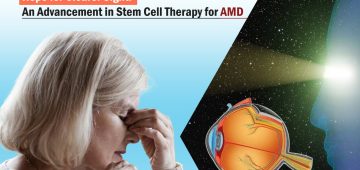
Age-related macular degeneration (AMD), one of the main causes of irreversible blindness and visual impairment in the elderly, may now be treated thanks to new behavior in transplanted stem cell-derived retinal pigment epithelial (RPE) cells. The research team used preclinical models to identify a unique subset of transplanted RPE cells that closely resembled normal adult human RPE cells, which are essential for maintaining eyesight.
The team was made up of scientists from the Nanyang Technological University (NTU) Singapore’s Lee Kong Chian School of Medicine (LKCMedicine), the Singapore Eye Research Institute (SERI), the National University of Singapore (NUS Medicine), the National University of Singapore (Yong Loo Lin School of Medicine), and the Institute of Molecular and Cell Biology (IMCB) of A*STAR.
The research team used single-cell RNA sequencing technology under the direction of Dr. Bhav Parikh, Scientist at A*STAR’s IMCB, and Dr. Paul Blakeley, Senior Research Fellow at NUS Medicine, to comprehend the genetic behavior of individual cells in preclinical models, including their survival and maturation. The research showed that after transplantation, stem cell-derived RPE cells change, and a subset changed to resemble mature human RPE cells very closely. Genes supporting eyesight and encouraging cell survival were expressed in this subset. This suggests that in order to identify particular cellular modifications that have an impact on the outcome and efficacy of retinal cell treatment, it is essential to research the transplanted retinal cells at the single-cell level. The knowledge gained could aid in future development of eye disease treatments as well as enhancement of transplanted retinal cells’ functionality, viability, and host integrability.
In 2040, it is predicted that 288 million people would have AMD. Although retina cell therapy is currently undergoing safe clinical trials, there is no cell therapy treatment for AMD that has been approved. This may be explained by the absence of reliable techniques to assess the effectiveness of the transplanted RPE cells, including cell survival and integration inside the human eye to facilitate vision restoration. The biology and roles of transplanted RPE cells have been revealed in this work, which could increase knowledge of cell-based therapies for AMD and other eye disorders in the future.
“Advancing AMD treatments via cell therapy hinges on uncovering the key elements that bolster the endurance, integration, and functionality of stem cell derived RPE cells after transplantation into the eye. Using single-cell RNA-sequencing, we discovered the precise factors that empower RPE cells to not only survive but also integrate and perform optimally in supporting vision.” said Dr Parikh, lead author of the study and Scientist at A*STAR’s IMCB.
“This work has future implications to enhance outcomes of RPE cell therapy. For example, prior to transplantation, RPE cells in culture that display this distinct gene expression profile can be selectively chosen for RPE transplant to enhance post-transplant survival. Moving forward, we hope to develop manufacturing processes in line with cGMP regulations to culture these ‘superior’ RPE cells for AMD treatment.” said Dr Su Xinyi, corresponding author of the study, Acting Executive Director at A*STAR’s IMCB and Assistant Professor at NUS Medicine.
“Current therapies in AMD based on pharmacological agents have limited effect in cases of advanced visual loss. Cell-based therapy may address this important unmet need. This work is important in advancing cell-based therapy in AMD.” Said Professor Gemmy Cheung, Head, Medical Retina Dept, Singapore National Eye Centre (SNEC) and Head, Retina Research Group, SERI.