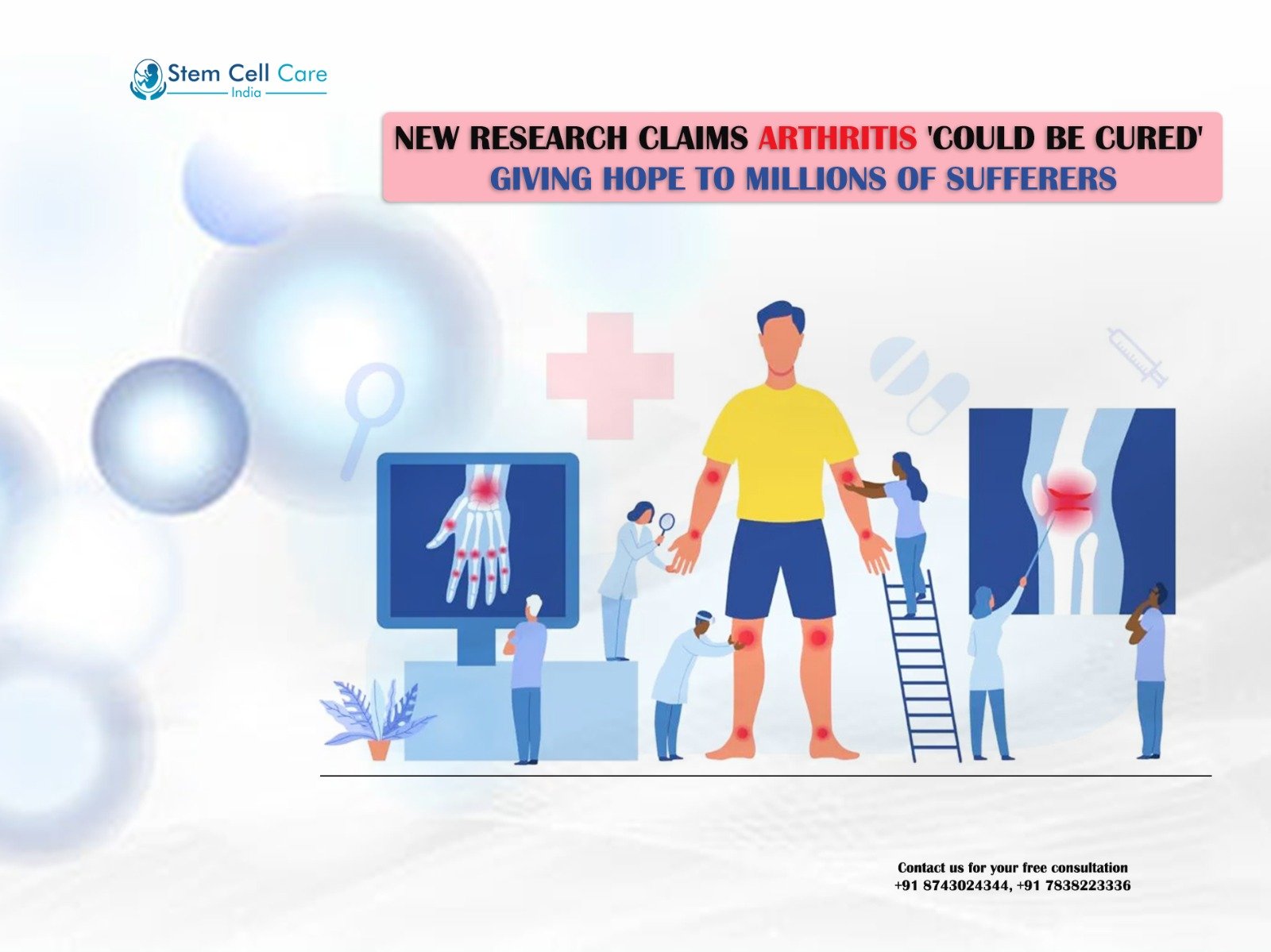
Millions of individuals suffer from crippling arthritis, but new research suggests a potential treatment.
Researchers believe they have found a kind of stem cell that will enable them to repair cartilage and heal the ailment. Deterioration of cartilage and other components in joints leads to osteoarthritis, which can produce excruciating pain and inflammation. According to the NHS, it affects almost eight million individuals in the UK and is the most prevalent type of arthritis.
The majority of osteoarthritis treatments now available focus more on symptom management than on treating the underlying causes of the degenerative, long-term illness. Although injuries can occur at any age, it typically develops in persons who are in their late 40s or older. Osteoarthritis can worsen with age, obesity, trauma, and family history, among other things.
But researchers at the University of Adelaide in Australia hope that their new discoveries, which refute the notion that arthritis results from “wear and tear” in joints, may shed new light on the illness and perhaps even help treat it. Dr Jia Ng of Adelaide Medical School, who co-led the study, said: “The findings of our study reimagine osteoarthritis not as a ‘wear and tear’ condition, but as an active – and pharmaceutically reversible – loss of critical articular cartilage stem cells. With this new information, we are now able to explore pharmaceutical options to directly target the stem cell population that is responsible for the development of articular cartilage and progression of osteoarthritis.”
Researchers at the University of Adelaide have found that a novel group of stem cells, identified by the Gremlin 1 gene, are driving osteoarthritis progression. Mice’s joint cartilage was encouraged by fibroblast growth factor 18 (FGF18) to produce Gremlin 1 cells. This resulted in a notable restoration of cartilage thickness and a decrease in osteoarthritis.
With regard to other types of cartilage damage and disease, which are infamously difficult to treat and heal, stem cells provide fresh possibilities for cartilage regeneration. Although Dr. Ng refers to the existing osteoarthritis treatments as a “Band-Aid approach,” this new knowledge may result in a medication that reverses osteoarthritis and enhances overall health.
Dr Ng added: “Known comorbidities of osteoarthritis include heart, pulmonary, and kidney disease, mental and behavioural conditions, diabetes, and cancer. Our study suggests that there may be new ways to treat the disease rather than just the symptoms, leading to better health outcomes and quality of life for people who suffer from osteoarthritis. We look forward to the outcome of these trials and to contribute to the better understanding of a pharmaceutical mechanism to treat osteoarthritis.” Human trials are being conducted, according to Dr. Ng, despite the fact that their discovery is now restricted to animal models. There are genetic parallels with human samples.