Table of Contents
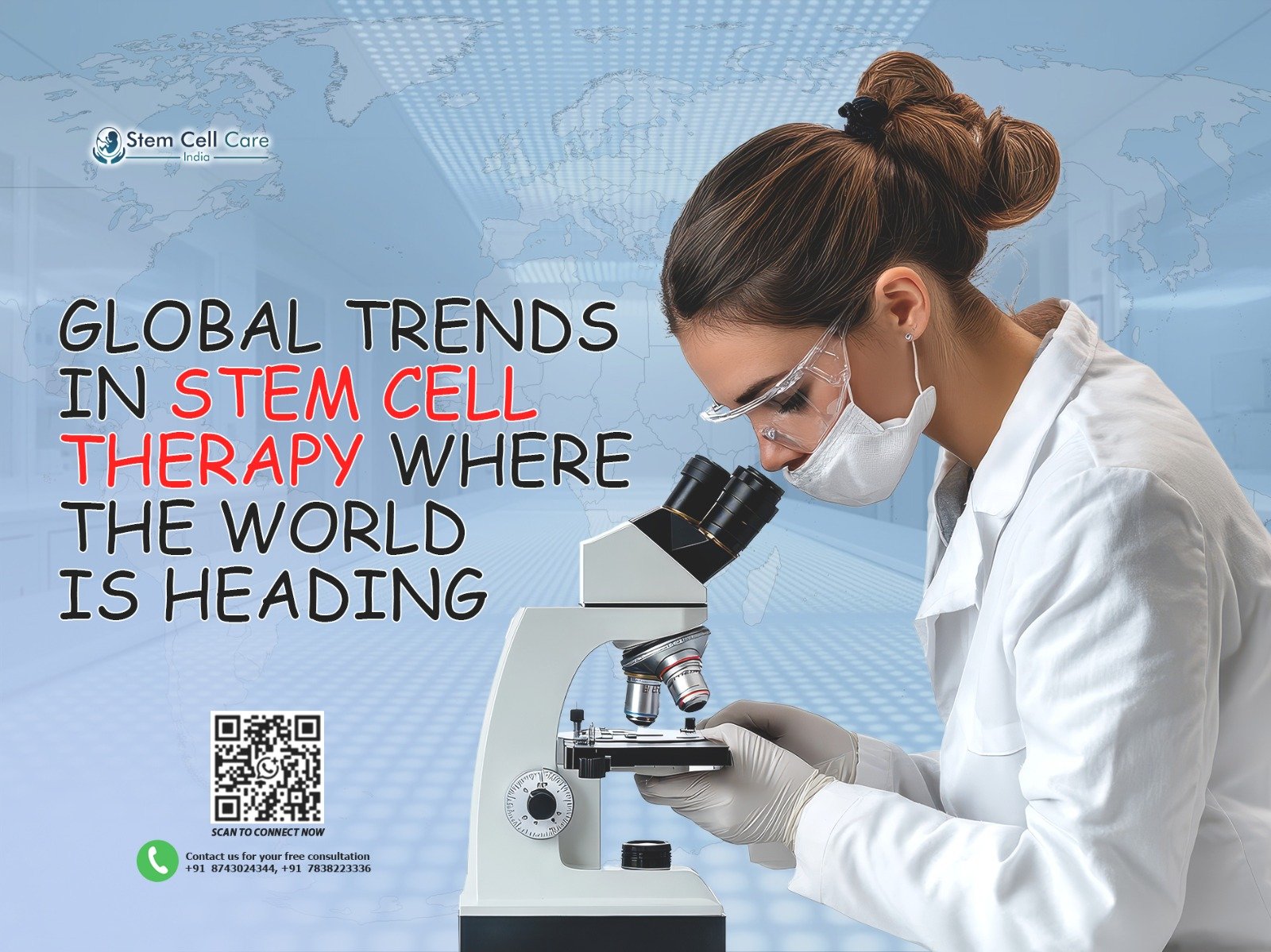
Summary: Stem cell therapy is rapidly evolving worldwide with the help of advances in regenerative science, discovery of new research collaborations and clinical trials which are aimed at tissue regeneration and improvement of future medical treatments.
Over the decade long, medicine has focused on giving symptom based relief or slowing the progression of diseases. Eventually, stem cell therapy was introduced as supportive treatment that supports healing through repairing and regenerating at cellular. With years of research, scientists across the world are studying how stem cells can support the healing process that the body can not achieve on its own.
Nowadays, research in regenerative medicine is progressing quickly. With advanced technologies, improved labs, and with international collaboration together are helping scientists and researchers better understand how stem cells function and where they can be beneficial and applied safely in medical treatment. Understanding the current progress and discoveries can help patients, who are considering this therapy, make better decisions.
Recent Advances in Stem Cell Therapy
Several studies published recently have indicated a lot of development, which is resulting in the increasing utilization of stem cell therapy.
Organoids and Lab-Grown Tissues: Scientists have been successful in culturing small organs, like structures from stem cells and using these for different testing purposes.
Enhanced Cell Delivery Techniques: Scientists have been successful in finding techniques to inject stem cells straight to the injured area of the tissue, thus significantly increasing the effectiveness of stem cell therapy.
Combination Therapies: Nowadays stem cells are used in conjunction with other substances to make stem cell therapy more efficient.
Growing Clinical Trials: Stem cells have been found to be very useful in spinal cord injury repair as well as in the treatment of other diseases such as cardiovascular, diabetes, and neurodegenerative diseases.
In fact, the above statements are proof that stem cell therapy, although slowly, is surely advancing towards a wider, large, scale application.
Key Innovations in Stem Cells
Currently, much research around the world has helped in scientific innovation that has boosted stem cell research for different conditions.
Induced Pluripotent Stem Cells (iPSCs): By reprogramming adult cells, iPSCs are essentially made to be embryonic stem cells. They give researchers the opportunity to understand the disease mechanism and to formulate personalized therapies.
Gene Editing Technologies: Scientists use a handful of gene editing tools such as CRISPR to cut into genes of stem cells which makes it easier for them to study genetic diseases and uncover new treatments.
3D Cell Culture Systems: In lifelike experimental settings, scientists can produce stem cells that self, organize into organs, like structures.
Stem Cell Banking: Stem cell preservation is becoming more and more popular worldwide and can be a great source for regenerative therapies in the future.
Using these advanced research methods that have already progressed in understanding the complex interaction between stem cells and the human body, eventually, providing a promise for safe and efficient therapy.
Prominent Researchers and Institutes in Stem Cell Research
As far as global research is concerned, India has played a crucial role in contributing in global stem cell research. Over the years, many research institutions and medical centers across the country have been actively studying regenerative medicine and clinical trials for stem cell therapy.
Some of the leading Indian institution working:
- All India Institute of Medical Science (AIIMS)
- National Center for Cell Science (NCCS)
- Institute for Stem Cell Science and Regenerative Medicine (inStem)
These institutions participate in clinical trials and laboratory research. They also carry out international collaborations to promote the development of regenerative medicine in India.
The Impact of Stem Cell Therapy on Future Medical Treatments
As the stem cell research is continuing to rise, stem cell therapy may influence the future healthcare by shifting the medicine toward regenerative ways.
The possible impacts in the near future are:
- Healing of damaged tissues and organs
- Development of new treatment methods for chronic conditions
- Development of individualized regenerative medicine based on the patient’s cells
- Development of new drug testing methods
Researchers are of the opinion that the use of stem cells in combination with other technologies such as gene editing and bioengineering will open new avenues for the treatment of patients in the near future.
The Concluding Thoughts
Global stem cell research is continually progressing through new scientific discoveries, clinical studies, and the sharing of knowledge between countries. While regenerative medicine makes strides, the patient who is willing to take a risk making a treatment decision may choose to talk to Stem Cell Care India for expert advice in the areas of regenerative medicine and stem cell therapy.
Frequently Asked Questions
Q1. What is stem cell therapy, and how does it work?
Ans. Stem cell therapy is a treatment that uses regenerative stem cells, which can grow into special tissues, to heal damaged tissues while assisting the body in its healing process.
Q2. What diseases could stem cell therapy potentially treat?
Ans. Stem cell therapy has the potential to treat spinal cord injury, osteoarthritis, diabetes, neurological disorders, cardiovascular diseases, etc.
Q3. Is regenerative medicine different from traditional medicine?
Ans. Yes, regenerative medicine is different from traditional medicine, as traditional medicine treats the symptoms of a disease, while regenerative medicine treats the cause of the disease.
Q4. Are stem cell therapies approved medical treatments?
Ans. Stem cell therapy, i.e., bone marrow transplantation, is an approved medical treatment, but regenerative stem cell therapy is still in clinical research and trials.
Q5. Why is regenerative medicine the future of medicine?
Ans. Regenerative medicine is the future of medicine, as it treats disorders caused by the damaged tissues, which could potentially heal the tissues better than traditional medicine, which treats the symptoms of a disease.
Reference Links
Recent developments and future prospects in stem-cell therapy
https://pmc.ncbi.nlm.nih.gov/articles/PMC11634165/
Current state of stem cell-based therapies
https://pmc.ncbi.nlm.nih.gov/articles/PMC7367472/
Advancements and challenges in stem cell transplantation
https://pmc.ncbi.nlm.nih.gov/articles/PMC11379611/
Stem cell therapy: From idea to clinical practice
https://www.mdpi.com/1422-0067/23/5/2850