Table of Contents
Summary: Discover how stem cells are being researched for age-related macular degeneration, aiming to restore and repair damaged cells to support vision preservation in patients.
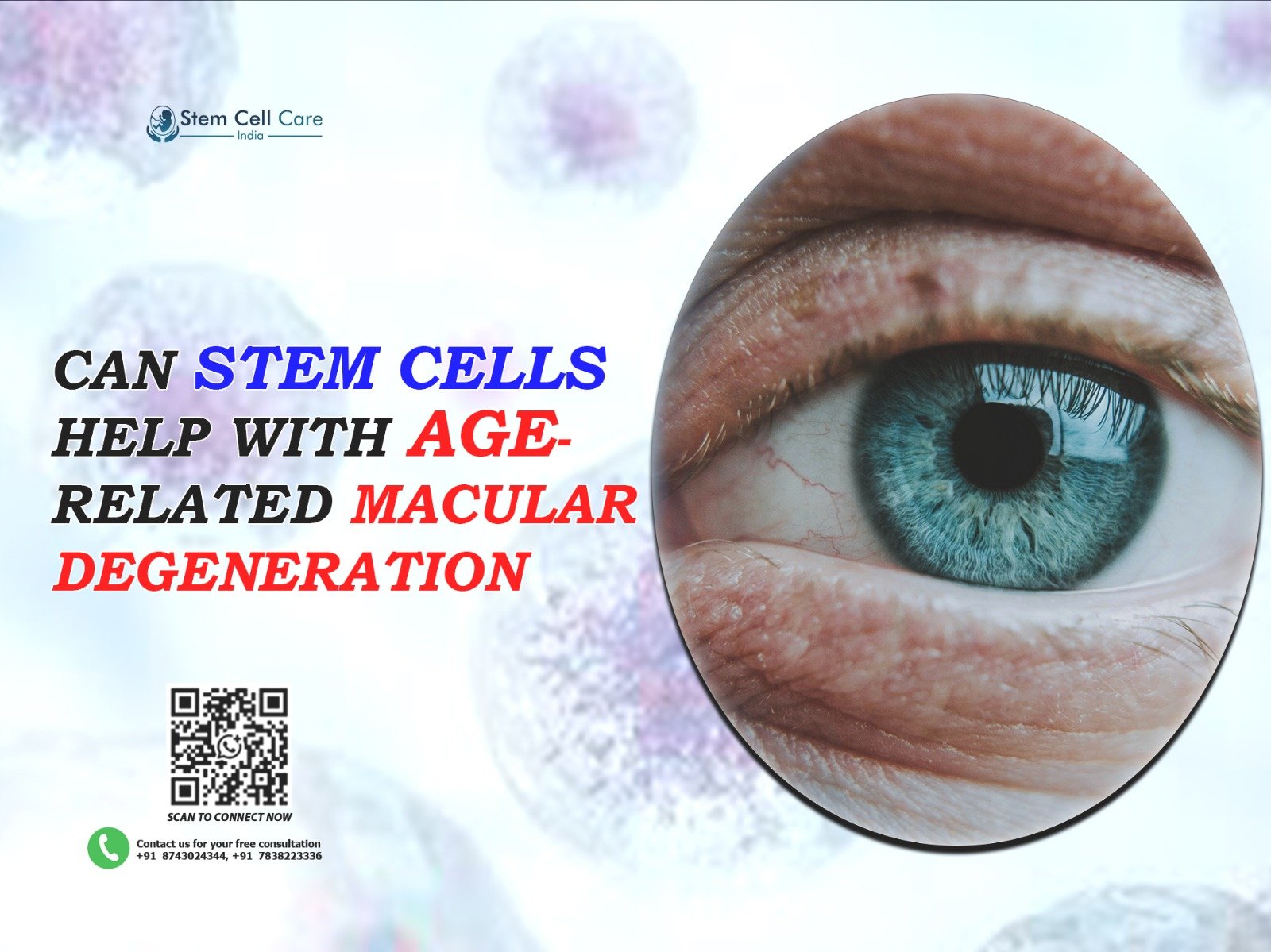
Have you ever wondered how much you rely on your clear vision for doing daily activities from reading messages to recognising faces? This beautiful experience can sometimes get disturbed due to age-related macular degeneration that gradually affects the central vision of the patient, making daily tasks difficult for many patients of different age scales.
This condition often affects the macula, a small part of the retina responsible for sharp and detailed vision. Although, traditional treatments focus on providing a symptoms based relief to the patients and slowing the disease. However, due to limited healing in current treatment, scientists are exploring whether regenerative medicine such as stem cell therapy can offer renowned hope for patients. Let’s explore to understand how AMD affects patients and can stem cells help with age-related macular degeneration.
What Are Stem Cells and How Do They Work?
Stem cells are essentially the body’s own repair system and have the qualities of a stem cell’s ability to differentiate into any type of cell and thus assist the body in repairing damaged cells.
To put it plainly, stem cells may assist a body in healing in the above ways.
- Replacement of Cells: The possibility of stem cells transformation into new cells that are the replacements of damaged cells in the eye.
- Support for Healing: Stem cells secrete growth factors, which are biological signals, that support the body in healing.
- Reducing Inflammation: Stem cells can reduce inflammation that in turn damages the tissues.
These qualities of stem cells have led scientists to consider them as a possible therapy for degenerative eye diseases, including AMD.
Types of Stem Cells: Induced Pluripotent vs Adult Stem Cells
The stem cells that are researched in the field of regenerative eye therapy are of two main types:
Induced Pluripotent Stem Cells (iPSCs)
Induced pluripotent stem cells are adult cells that are altered in a way that they behave like stem cells.
Induced pluripotent stem cells are able to:
- Become different cell types
- Grow retinal cells in a lab
- Enable scientists to study retinal diseases and therapy
Induced pluripotent stem cells are the most researched stem cells in the field of regenerative eye therapy because they allow scientists to study the field without using stem cells obtained during the early developmental stage.
Adult Stem Cells
Adult stem cells are normally located in:
- Bone marrow
- Adipose tissue
- Fat tissue
They are normally researched in the field of regenerative eye therapy because they are able to:
- Support the repair of tissues
- Produce helpful growth factors
- Support the protection of retinal cells
The Process of Using Stem Cells for Eye Disorders
Stem cell treatment for the mentioned diseases is still in the investigational stage; however, research is conducted through a standard framework.
- Cell Collection: The stem cells are collected from the patient or generated in a laboratory setting.
- Laboratory Preparation: The stem cells are then prepared for medical usage through appropriate processing.
- Targeted Placement: The stem cells are then implanted at targeted sites of the retina where the disease is causing harm.
- Monitoring and Follow-Up: The health of the retina and the changes in vision are monitored to assess the safety and efficacy of the treatment.
Benefits and Risks of Stem Cell Therapy for Macular Degeneration
Every new treatment comes with its own benefits and risks that makes it vary for each disease and patients. One of the most renowned treatments is stem cell therapy that has the potential to provide healing through repair and regeneration at the cellular level. However, this treatment has its own benefits and risks too.
Possible Benefits
- May support the healing of damaged retinal cells
- May improve the conditions inside the retina
- May halt the progression of the disease in some cases
Possible Risks
- Inflammation after the procedure
- Risk of infection
- Behavioral unpredictability if the cells are not under control
Based on the above factors, the stem cell therapy for AMD is still under clinical trial.
Current Research and Clinical Trials on Stem Cells in Ophthalmology
Stem cells research for eye related disorders has increased so much interest in the last few decades. Some of the few areas are being researched using stem cells for the treatment of various eye conditions affecting the retina.
- age-related macular degeneration
- retinitis pigmentosa
- retinal degenerations
Scientists are examining stem cells for their potential to repair and regenerate damaged tissue in the retina. Currently, results of clinical studies have been promising, and long-term results of the research studies are still being conducted to determine the full potential of these cells for future treatment of eye related disorders.
The Bottom Line
Research on stem cells is creating new opportunities to comprehend and possibly cure age- related macular degeneration. While the field of regenerative medicine is progressing, those who are keen on these types of therapies are advised to get in touch with Stem Cell Care India to receive informed and expert advice on the various options available in regenerative medicine and stem cell therapy.
Frequently Asked Questions
Q1. Can stem cell therapy treat macular degeneration?
Ans. Stem cell therapy for macular degeneration is possible by regenerating retinal tissues and thereby protecting eyes from complete loss of vision one may experience from depending totally on stem cells.
Q2. How do stem cells help eye diseases?
Ans. By giving birth to new cells themselves, stem cells invade affected parts of the eye and promote production of new healthy nectin, a growth factor which helps to stop further damage of tissues.
Q3. What type of stem cells are used for retinal research?
Ans. Retina research utilizes both iPS cells, reprogrammed adult cells that behave like embryonic stem cells and adult stem cells, multipotent cells that exist in the body.
Q4. Is stem cell therapy approved for macular degeneration?
Ans. Treatments based on stem cells have been still under clinical trials. Hence the therapy has not been approved for treating macular degeneration yet.
Q5. Why is regenerative medicine important for eye diseases?
Ans. Being aimed at restoring the normal function of the organs, regenerative medicine has opened doors for the treatment of eye diseases that were considered untreatable until now.
Reference Links
Stem cell therapy for retinal degenerative diseases
https://pmc.ncbi.nlm.nih.gov/articles/PMC6121288/
Clinical applications of stem cells in retinal diseases
https://pmc.ncbi.nlm.nih.gov/articles/PMC7288190/
Stem cell-based therapy for macular degeneration
https://pmc.ncbi.nlm.nih.gov/articles/PMC5987030/
Stem cell therapy for retinal disorders: current perspectives
https://pmc.ncbi.nlm.nih.gov/articles/PMC8384754/