Table of Contents
Summary: Learn why so many people keep their hope in stem cell research for various conditions like heart tissue repair—what current studies says, and why this approach has yet to become routine care.
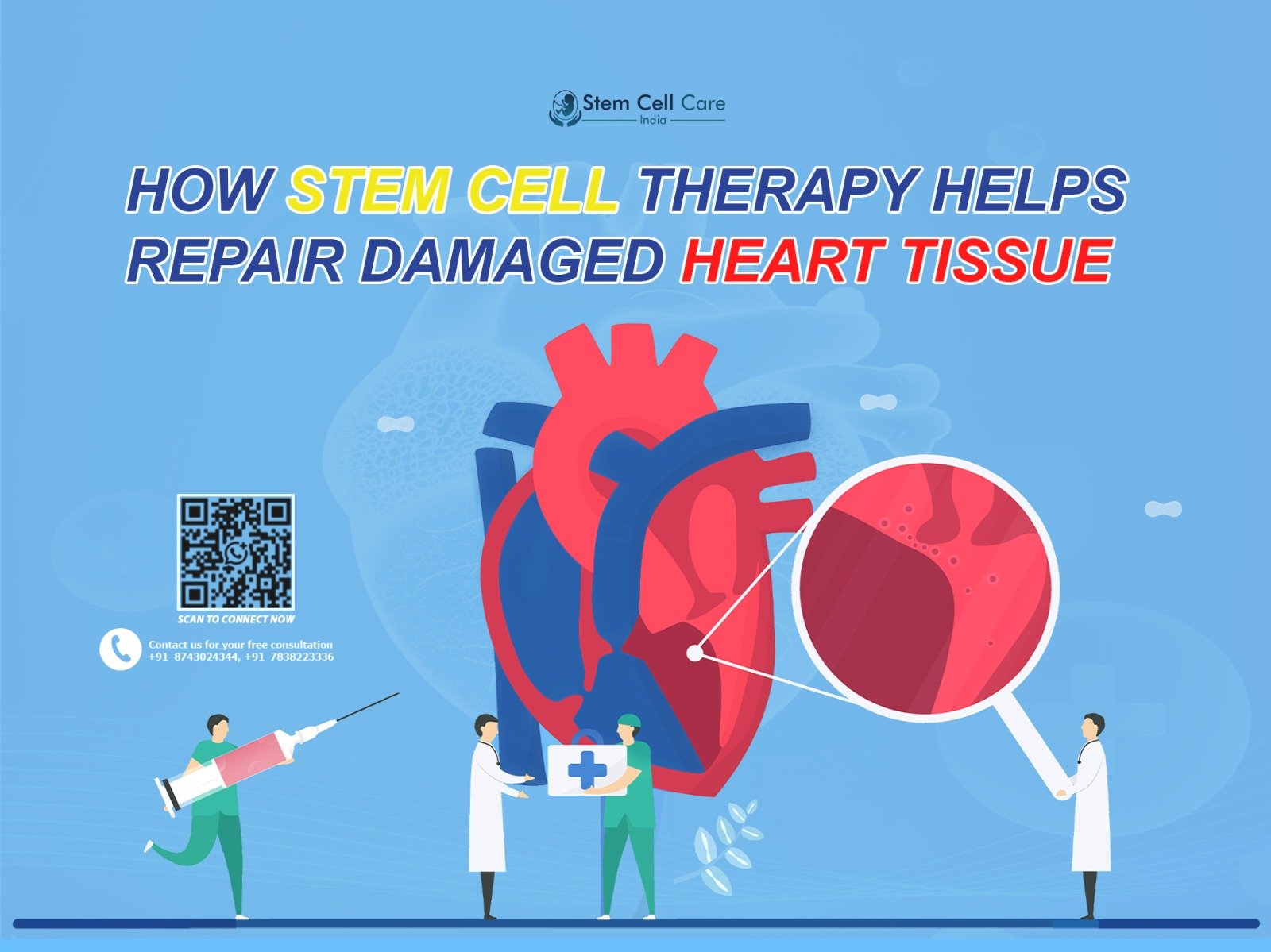
You are performing your daily activities and following your routine—suddenly a sharp pain in your chest comes and life is not the same anymore. For many people, heart damage doesn’t always show up suddenly. Sometimes, it builds over time after following the event of heart attack. Either way once the heart walls are affected, it doesn’t always return to how it was before.
Today, in these cases, most traditional treatments focus on improving function and protecting the heart from further damage. Which is not always the case, many patients often look for treatment that can actually repair the heart and return to its natural state. This is where regenerative medicine like stem cell therapy is often discussed as supportive treatment. It sounds as a promising hope for patients, but it’s important to understand what’s actually known and what is still being explored.
What Are Stem Cells and How Do They Work?
Cells found in the body have specific roles, such as muscle cells involved in locomotion. However, stem cells have attracted interest because of their ability to change into different types of cells and facilitate repair in specific instances.
The application of MSCs in disorders related to the heart is currently being investigated with a view to determining if these cells affect the healing process. While these cells cannot replace cardiac tissue, there is interest in their potential for modulating heart tissue healing in relation to:
- Inflammation modulation
- Tissue regeneration
- Cardiac function
Different Types of Stem Cells Used in Therapy
In search of stem cell therapy for heart conditions. You will usually come across a few varieties in literature.
- The hematopoietic stem cell type is currently being employed for some therapeutic applications, specifically associated with blood diseases.
- The mesenchymal variety is gaining more attention in cardiac diseases due to its behavior towards inflammation and tissue regeneration.
Other research studies focus on heart-specific varieties, although this field is relatively new. One must note that all these applications in cardiac diseases are currently under study and are not clinically established.
How Stem Cell Therapy Is Administered for Heart Conditions
The way stem cell therapy is used for patients isn’t that simple. It often depends on your heart conditions and how much damage it has suffered. In research labs, scientists use various methods to deliver stem cells into the body.
A few methods of stem cell treatment exist, as follows:
Injection Directly into the Myocardium: Cells are injected directly into the injured part of the tissue—typically carried out as an addition to another existing procedure, rather than as an independent one.
Coronary Artery Infusion: Stem cells are infused into the coronary artery, thus utilizing the natural flow of blood to guide the cells toward the damaged part of the heart.
Intravenous Infusion: The most minimally invasive method of treatment—the cells are injected into the bloodstream and flow through it to reach the target area in the heart.
Injection using a Catheter: A catheter helps inject stem cells into a certain part of the myocardium without any surgery.
Potential Benefits and Risks of Stem Cell Therapy
A lot of people come across articles and headlines that say—stem cell therapy can heal heart damage. In reality, researchers are currently looking at this treatment in a much more limited way, mainly focusing on how these cells support healing or improve certain function within time.
Some areas are being explored:
- How it may affect inflammation
- How it can support for tissue repair
- Potential benefits for cardiac related issue
On the other hand, some of the drawbacks include:
- Results are not consistent
- The long-term impact is yet to be determined
Stem cell therapy seems to be the way for future medicine—It is therefore necessary to approach it with clarity, not assumptions.
The Bottom Line
Heart recovery is a journey of patience and longer wait—even the muscle is not recovered enough as it was before the damage. While stem cell therapy is being studied for its potential but still evolving. For now, remaining educated and concentrating on proven treatment is more important than anything else. In case you opt for any of them, having a consultation with Stem Cell Care India will surely assist you.
Frequently Asked Questions
Q1. Does stem cell therapy help to heal the heart from damage?
Not yet. It focuses on preserving healthy heart tissues rather than reconstructing it. This is quite helpful to the extent that it makes the patient feel much better.
Q2. Can stem cell therapy be done for heart disease right now?
As it stands today, the use of stem cells to treat heart-related ailments has been undergoing clinical trials in India and is yet to be officially recognized as a treatment. Depending on the situation of each patient, he can opt for the therapy through the conduct of controlled clinical trials.
Q3. When can one start noticing effects of the treatment?
This depends very much on the individual but usually, results begin to show after a few weeks or even months.
Q4. Where do the stem cells actually come from?
Typically, they would be extracted from your own body using bone marrow or fat tissues. This way, the possibility of rejection is greatly diminished.
Q5. Does stem cell therapy replace the need for heart medication?
Absolutely not. Stem cell therapy does not replace heart medication but supports it.
Reference Links
National Heart, Lung, and Blood Institute (NHLBI) — Heart Disease Overview
https://www.nhlbi.nih.gov/health/heart
PubMed Central — Stem Cell Therapy for Heart Disease
https://www.ncbi.nlm.nih.gov/pmc/articles/PMC6602197/
ScienceDirect — Stem Cell Therapy for Cardiac Repair
https://www.sciencedirect.com/science/article/pii/S0167527317320842
International Society for Stem Cell Research (ISSCR) — Guidelines
https://www.isscr.org/policy/guidelines-for-stem-cell-research-and-clinical-translation