Table of Contents
Summary: Learn how stem cell therapy can help in healing diabetic foot ulcers, what current evidence suggest, and why it remains an investigational yet hopeful approach than old treatments.
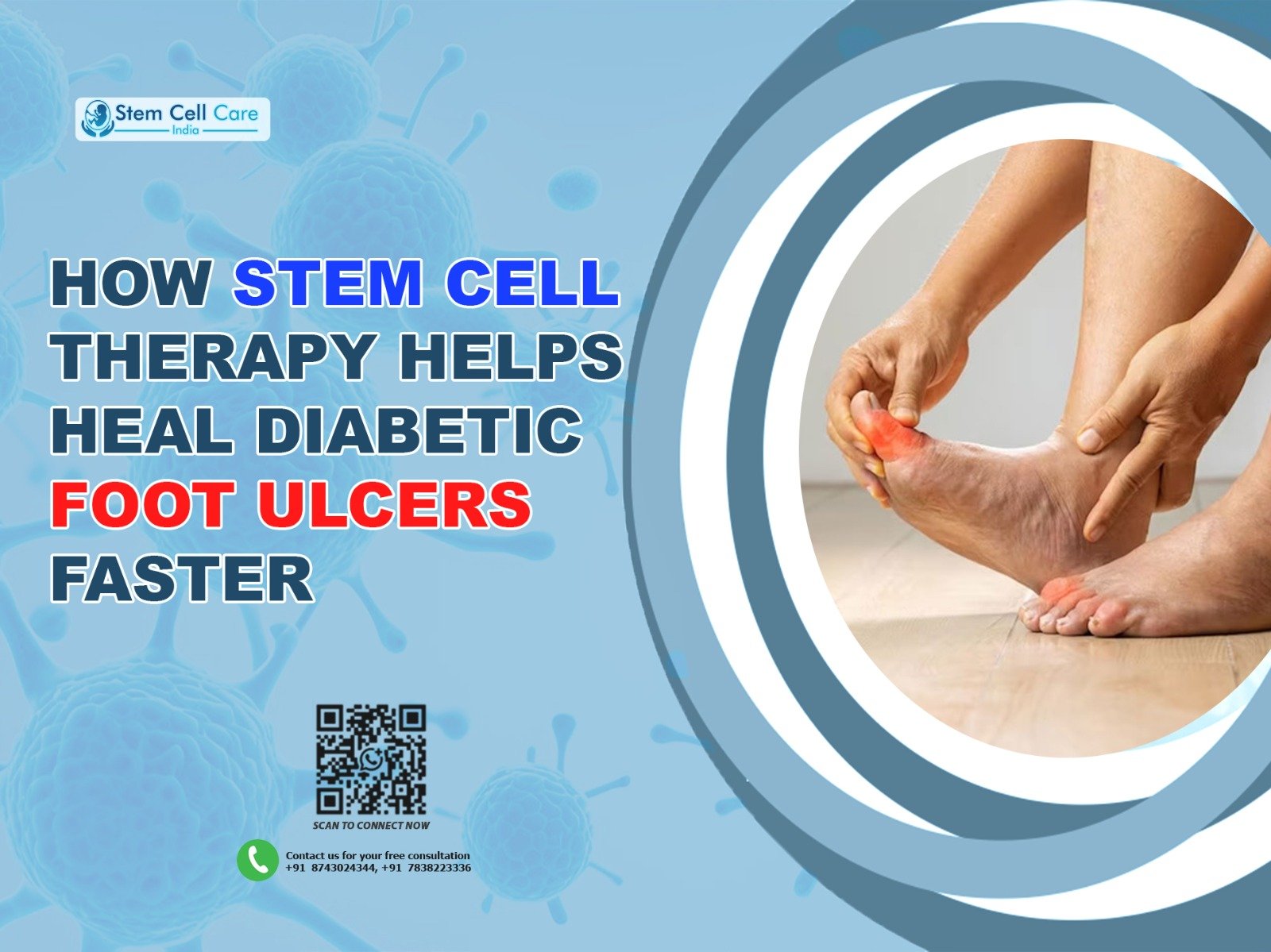
For many people getting a small cut around their foot is not that concerning—until they are living with diabetes. These wounds take longer to heal than usual, especially when nerve function and circulation are not working well, as a result it becomes diabetic foot ulcers.
Over time, managing these wounds becomes less about healing and more about consistent care—dressing, medication, and monitoring. Even with this much progress, healing may take time. Due to this, there has been growing interest in fields like regenerative medicine, mainly in stem cell therapy, to investigate whether it is possible to provide healing by boosting the body’s natural healing process through stem cells, but it’s worth understanding what it actually means in practice before undertaking the treatment.
What Is Diabetic Foot Ulcers?
Diabetic foot ulcer is defined as an open sore on the sole of the foot that fails to heal easily. Diabetic patients are highly vulnerable to developing such ulcers because of the poor circulation and nerve damage associated with their condition.
Diabetic foot ulcers are quite common. It is estimated that a considerable proportion of the diabetic population will suffer from foot ulcers at some point in their lives, and they have become the primary cause of non-traumatic amputations across the globe.
Cause of Diabetic Foot Ulcers
Some causes that lead to an increased risk for developing ulcers in patients suffering from diabetes include:
- Adequate supply of blood, which inhibits the healing process
- Damage to nerve endings (neuropathy)
- Injuries without feeling, like a minor cut
- Risk of infections, which aggravates injuries
Mostly, several causes combine to give rise to this problem rather than any one particular cause.
How Stem Cell Therapy Works in Healing Ulcers?
Standard treatment focuses on managing the wound—keeping it clean, reducing pressure, controlling infection. It treats the surface. Stem cell therapy works differently. It goes after the underlying problem.
Researchers are studying to find a way to support healing by influencing how your body responds to wounds and injuries. Instead of replacing old treatments—it’s being explored more as supportive treatment.
- Supporting new blood vessel formation
- Influencing inflammation in the wound area
- Assisting in tissue repair processes
However, it is important to note that stem cell therapy for diabetic foot ulcers is still under clinical research and is not approved as a standard treatment in India.
Clinical Studies and Evidence Supporting Stem Cell Use
There have been clinical studies looking into wound healing and regenerative approaches. Some findings suggest improvements in healing patterns but the result isn’t consistent yet.
Researchers are still working to understand:
- How reliable the results are
- Which patients might benefit more
- What long-term outcomes look like
So while there’s interest, this is still an investigational area rather than medication that is used routinely.
Comparing Stem Cell Therapy with Other Treatments
Standard care is still the foundation. That includes:
- Regular wound cleaning and dressing
- Infection control
- Blood sugar management
- Reducing pressure on the affected foot
- Surgical care when needed
These methods are well understood and widely used for the condition.
On the other hand, regenerative medicine is being studied—especially stem cell therapy to understand whether it can boost healing through repair and regenerative ability of stem cells with existing care in the future.
Where the Research Is Heading
The focus now is on making stem cell therapy more precise and more effective. Key areas researchers are working on:
- Better Delivery: finding the right source of stem cells, the correct dosage, and the best way to administer them for different wound types
- Combination Approaches: pairing stem cell therapy with other regenerative treatments to push results further
- Wider Accessibility: moving findings from clinical trials into real-world care for more patients
If you are living with diabetes and facing a wound that simply won’t heal. The options are evolving and consulting with specialists at Stem Cell Care India about whether the treatment suits your specific condition or not.
The Bottom Line
Diabetic foot ulcers need to be taken care of on a regular basis. Regenerative medicine and stem cell treatment are being studied but not yet approved for use.
It is important to know the distinction between the two to make informed choices. Armed with knowledge and the help of experts, one may pursue novel options while adhering to the tried-and-tested methods of treatment.
Frequently Asked Questions
Q1. How are diabetic foot ulcers usually treated?
Most cases are managed with wound care, infection control, and blood sugar management. It’s usually a step-by-step process rather than a one-time treatment.
Q2. Why do some wounds take longer to heal?
It often comes down to circulation, nerve damage, and infection. These factors slow down the body’s natural healing.
Q3. Is regenerative medicine used in regular treatment today?
Not at the moment. It’s still being studied and hasn’t become part of routine care.
Q4. Can I explore these options safely?
If you’re considering anything under research, it’s best to do it with proper medical guidance and within regulated settings.
Q5. Can Stem Cell Care India help me understand my options?
Yes, the focus is on helping you understand what’s relevant for your situation so you can decide with clarity.
Reference Links
NIDDK — Diabetic Foot Problems
https://www.niddk.nih.gov/health-information/diabetes/overview/preventing-problems/foot-problems
PubMed Central — Stem Cell Therapy in Diabetic Wounds
https://www.ncbi.nlm.nih.gov/pmc/articles/PMC6735753/
ISSCR — Guidelines for Stem Cell Research
https://www.isscr.org/policy/guidelines-for-stem-cell-research-and-clinical-translation