Table of Contents
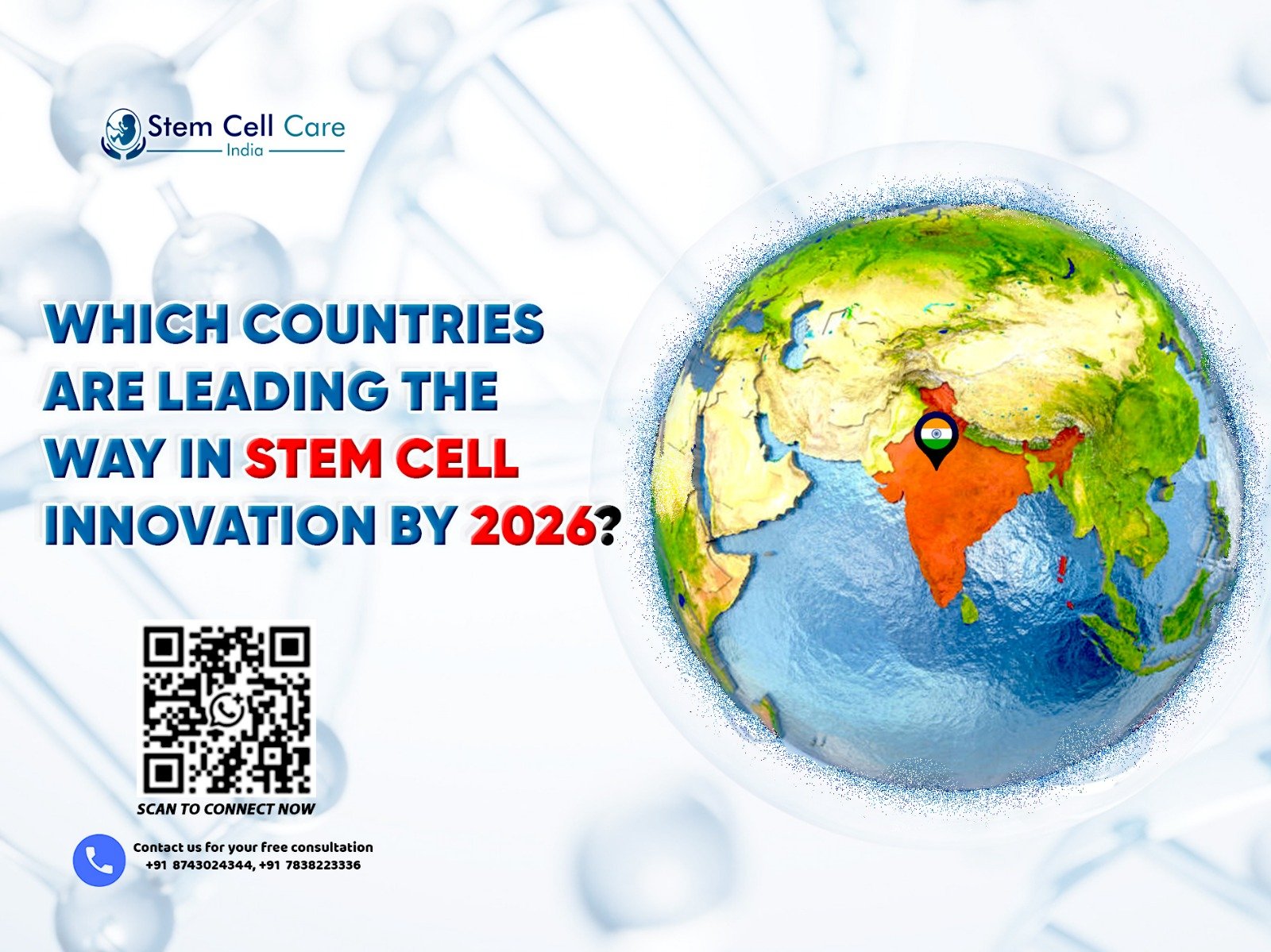
Summary: By 2026, worldwide innovation in the field of stem cells has grown rapidly, however, India is outstanding as being the most approachable, advanced, and patient-centric leader providing world-class regenerative care through state-of-the-art research and technology.
People with long-lasting pain, neurological problems, autoimmune diseases, and more are suffering across the world and hoping for treatments that seem to be effective, safe, and backed by real medical progress. To many, whose customary ways have ceased to be of any help, stem cell therapy has become a great alternative treatment.
Several countries will have advanced in the field of regenerative medicine by 2026, but India’s dedication to healing rather than competing has made it a leader globally. This blog explores the worldwide innovation and points out the reasons why India is leading with the heart.
Understanding Global Stem Cell Innovation in 2026
The world has invested heavily in regenerative medicine, and the field of study today looks quite different from what it was a couple of years ago. Innovations shaping 2026 include:
- AI-powered tools that help in the selection of the best-quality cells
- Personalized treatment plans designed around each patient’s biology
- Exosome-based therapies to support healing
- Improved safety standardization in laboratories
- Increasing research in chronic illness and tissue repair
These advancements are bringing more comfort and reassurance to patients who want alternatives with scientific backing. Amongst all countries moving forward, India is quietly and compassionately becoming the heart of this progress.
India As the Global Leader for Stem Cell Therapy Innovation
- Research and Clinical Care Go Hand-in-Hand
The right balance between scientific progress and real patient care is found in India. As research grows, so does clinical accessibility. Patients are not limited to trials far away or procedures that are too expensive; instead, they find:
- Modern laboratories
- Experienced regenerative specialists
- Ethical, patient-centered protocols
This combination makes stem cell therapy in India both advanced and truly accessible.
- AI-Guided Personalization for Safer Outcomes
India has embraced new AI tools that help doctors understand exactly which cells are most suitable for each patient. This means treatments are:
- More precise
- More predictable
- More comforting to patients who want clarity and safety
It represents a shift in which technology and compassion meet.
- Innovation Made Available to People of All Backgrounds
This has transformed India into a haven for international patients who feel overwhelmed by high treatment costs or a lack of options in their own countries. Here, they find:
- Reasonable prices
- Transparent care
- Clear communication
- Doctors who actually listen
As much as its science, India’s leadership grows from its humanity.
- Powerful Regenerative Infrastructure Based on Trust
Behind every treatment is a system patients can trust.
- GMP-certified stem cell laboratories
- Safe, ethically guided cell processing
- Experienced medical teams
- A supportive, structured treatment atmosphere
It is this environment that enables India to bring world-class regenerative therapy to real people in real need.
Other Countries Contributing to Stem Cell Innovation
Here are some other countries working on stem cell therapy:
- USA: Good research, but treatment access remains limited.
- Japan: Known for scientific progress. However, the cost of stem cell therapy remains higher.
- Europe: Focus on safety, but slower in treatment availability.
Although these nations are moving forward, India’s patient-first approach allows it to lead with heart and accessibility.
Why India Leads the Future of Stem Cell Therapy in 2026
India, being a leader, does not come from being the fastest, but from providing something for advanced and deeply valuable treatment to patients:
- Care that feels personal
- Globally aligned science
- Fair costs that one can easily afford.
- Doctors who gently lead patients
- Innovations that reach people, not just papers.
India stands for a future of advanced medical treatment, warm, affordable, and hopeful, with a human face.
What Does This Mean for Patients in 2026?
As the stem cell therapy in India progresses, it means patients around the world get the benefit from:
- Quick Access to Modern Regenerative Care
Patients can receive their treatment on time, with no long waiting list, therefore quicker relief and better opportunities to cure before conditions deteriorate further.
- Treatment Planning Based on Individual Need
Doctors create personalized plans for each patient, taking into account their overall health condition, and help them understand their treatment process more clearly.
- Improved Safety due to AI-Supported Procedures
AI helps in checking the quality of cells and predicting outcomes. With AI, every treatment will be far safer, more accurate, and less uncertain.
- Supportive and Compassionate Medical Guidance
The doctors talk to them in soft tones, answer questions, and guide them with empathy and patience, thus making them feel supported.
- Meaningful Improvements in Real-World Health Conditions
In most patients, improvements in pain, mobility, and comfort during everyday activities become meaningful; thus, treatment can be hopeful and practically beneficial.
Need Consultation
If you or your loved one is considering long-term healing through stem cell therapy, then thoughtful guidance can be sought from Stem Cell Care India. This is a team that explains treatment options, answers concerns with a lot of patience, and gives support at every stage in your journey. With a focus on safety, ethics, and compassionate care, they enable patients to feel confident and cared for.
The Bottom Line
By 2026, the stem cell field will see incredible changes, and India will definitely be leading the way. Motivated by empathy and a deep concern for the patient, cutting-edge tech will be combined with the qualities of love, faith, and easy access. India, in fact, is turning into the destination where cure is not only feasible but also intimately shared with the patients, for a great number of people worldwide.
Frequently Asked Questions
Q1. Which country would be the leading innovator in stem cells in 2026?
Ans. India is the leading destination due to the combination of advanced science with easy access to treatment and patient-oriented care.
Q2. Why is India strong in stem cell therapy?
Ans. The Indian model has combined modern laboratories, highly qualified doctors, the best ethical practices, and compassion toward patients.
Q3. Is stem cell therapy in India safe?
Ans. Yes, the accredited clinics follow strict laboratory standards and personalized treatment protocols.
Q4. Why do international patients believe in India?
Ans. India offers clear communication, affordable care, and treatments guided with empathy.
Q5. How advanced is the Indian stem cell technology in 2026?
Ans. It has AI-supported cell selection, personalized regenerative plans, and modern therapeutic tools.
Reference Links
Trounson A, McDonald C.
Stem cell therapies in clinical trials: Progress and challenges.
Explains global progress and country-wise innovation trends
https://pubmed.ncbi.nlm.nih.gov/20554752/
Frontiers in Artificial Intelligence
Artificial intelligence applications in regenerative medicine.
https://www.frontiersin.org/articles/10.3389/frai.2021.724357/full
Caplan AI, Correa D.
The MSC as an “injury drugstore.”
https://pubmed.ncbi.nlm.nih.gov/27774387/
MSC-derived extracellular vesicles: Clinical potential and translation.
https://stemcellres.biomedcentral.com/articles/10.1186/s13287-019-1226-9
Lunt N et al.
Medical tourism and healthcare access in emerging economies.
https://pubmed.ncbi.nlm.nih.gov/24534521/
Frontiers in Neurology
Stem cell therapy advances in neurological disorders.
https://www.frontiersin.org/articles/10.3389/fneur.2020.00219/full