Table of Contents
Summary: Current treatments for traditional forms of the condition only relieve intraocular pressure, while stem cell therapy provides a novel approach of offering protection and therefore preserving the life of the nerve cell in the eye, promoting the restoration of eyesight.
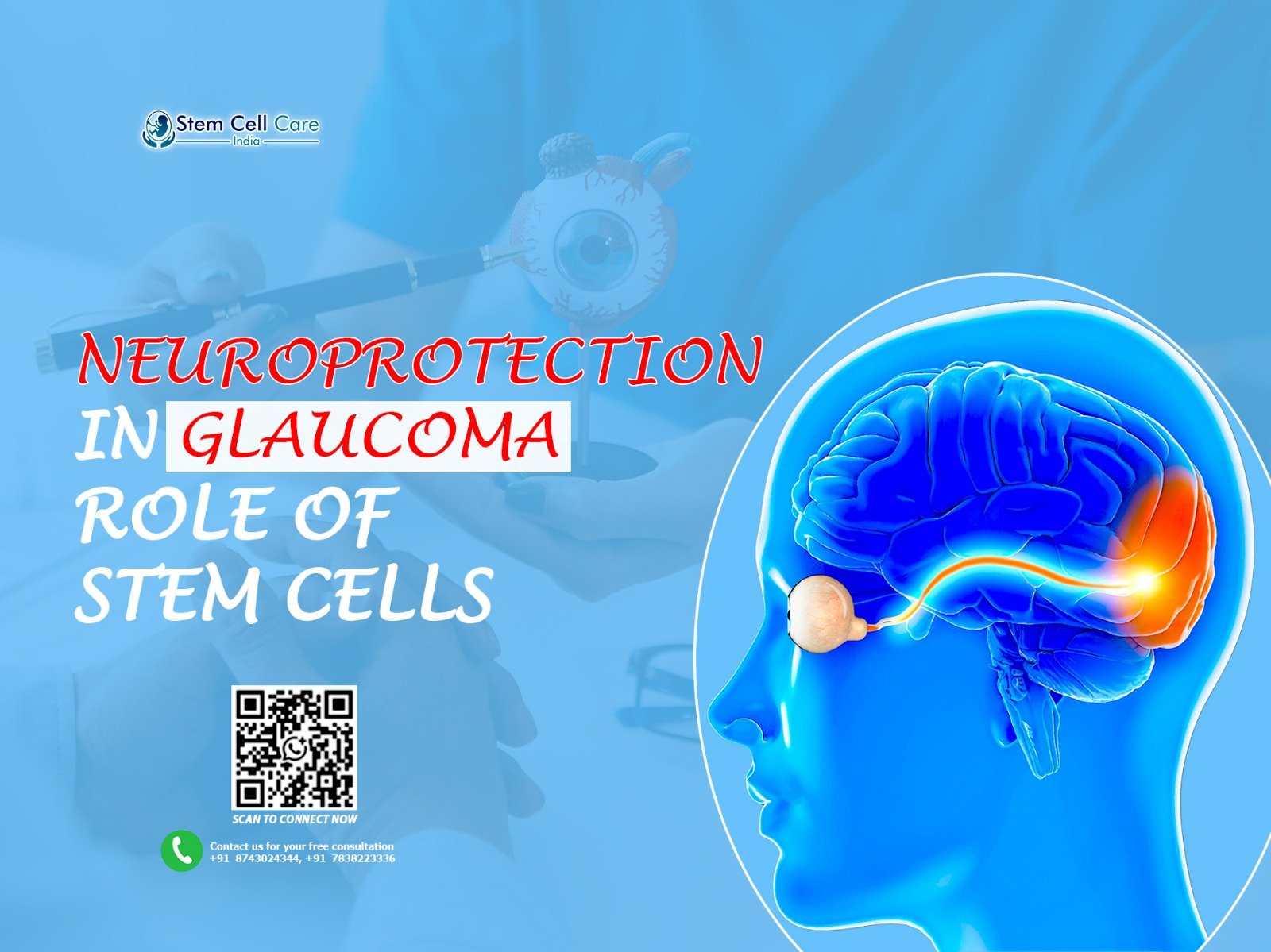
For a long time, people have referred to glaucoma as the silent thief of sight. Glaucoma is a disease that has been strongly linked with a rise in intraocular pressure (IOP), and the latter has thus been regarded as the number one risk most associated with glaucoma. Nevertheless, glaucoma cannot be equated with IOP only. The final stage of glaucoma is due to lead damage to the optic nerve. Once the crucial retinal ganglion cells, that are responsible for transmitting visual signals from the eye to the brain, are damaged, the loss of vision is irreversible. This is the point where neuroprotection makes sense.
Fortunately, rather than focusing only on the symptoms or lowering pressure, neuroprotection properties in the stem cells aim to preserve and support the survival of nerve cells. Let’s understand the role of stem cells and how they are being explored as a promising treatment in this emerging approach.
Understanding Neurodegeneration in Glaucoma
Glaucoma is increasingly accepted as a neurodegenerative disease. The process involves a variety of different factors that intertwine and, over time, adversely affect retinal ganglion cells.
- Retinal Ganglion Cell Apoptosis: Programmed cell death diminishes the quantity of healthy neurons, eventually resulting in a diminished visual field.
- Oxidative Stress: Excessive reactive oxygen species are destructive to cell components and hasten nerve cell degeneration.
- Glutamate Excitotoxicity: When glutamate is elevated, it may overstimulate the neurons, causing them damage or death.
- Mitochondrial Dysfunction: A reduction in energy production compromises retinal ganglion cell function, making them more vulnerable.
- Chronic Inflammation: The inflammatory signalling also affects the optic nerve deterioration.
These mechanisms underscore the fact that glaucoma is more than a matter of pressure-induced injury but is a disease of survival.
What Is Neuroprotection?
Neuroprotection refers to the ways in which neurons are preserved in terms of their structure and functions. In the case of glaucoma patients, the primary goal becomes protecting the retinal ganglion cells and the optic nerve.
- Preserving Existing Neurons: Continuing efforts to slow or prevent the progression of retinal ganglion cell loss.
- Supporting Cellular Survival Pathways: Developing ways to improve the internal resistance mechanisms in neurons.
- Stabilizing the Optic Nerve Environment: Improving the microenvironment to reduce progressive damage.
Neuroprotection does not ensure the return of lost vision but rather the slowdown in the progression of the disease and the maintenance of existing vision.
How Stem Cells Contribute to Neuroprotection in Glaucoma?
Currently, researchers are exploring the use of stem cells in treating glaucoma, not necessarily to replace damaged nerve cells, but to provide the nerve cells under stress with biological assistance. In this manner, stem cells can provide a variety of different neuroprotective mechanisms.
Secretion of Neurotrophic Factors: Stem cells secrete growth factors, such as brain-derived neurotrophic factor (BDNF) and nerve growth factor (NGF). These factors are beneficial in supporting RGC survival and increasing its resilience during injury.
Anti-Inflammatory Modulation: Mesenchymal stem cells (MSCs) can regulate immune responses by modulating cytokine production. This ensures stability in the retinal framework and prevents secondary nerve damage.
Reduction of Oxidative Stress: Stem cells have the capacity to elicit antioxidant mechanisms in the retina, thus reducing cellular damage from oxidative stress.
Mitochondrial Support: Emerging research indicates that there may be an impact on neuronal mitochondria by stem cells to improve metabolic efficiency.
Microenvironment Repair: By enhancing the biochemical environment of the retina, the stem cells are providing an environment more conducive to the survival of the neurons.
All of these actions combine to position stem cell therapy as a neuroprotective intervention rather than just a replacement therapy.
Types of Stem Cells Studied for Glaucoma
There are various types of stem cells that researchers have studied.
- Mesenchymal Stem Cells (MSCs): MSCs derived from bone marrow or adipose tissue, these cells have been extensively studied due to their anti-inflammatory and neurotrophic features.
- Neural Stem Cells: These cells hold potential for supporting neural repair and could impact retinal regeneration pathways.
- Induced Pluripotent Stem Cells (iPSCs): iPSCs are generated from adult cell lineages and can be reprogrammed to study optic nerve regeneration.
Each cell type provides unique benefits, although their application in a clinical context continues to be explored.
Need Expert Advice: Stem Cell Care India
Researchers are investigating stem cells for their potential neuroprotective role in the treatment of glaucoma, and the different results are related to the management plan and the regimen used. Interpretation of the results requires expert advice.
Patients looking for information on regenerative medicine can get help from Stem Cell Care India who will guide patients and help them decide if regenerative medicine is suitable for them.
The Bottom Line
Neuroprotection properties indicate a major change in the understanding and treatment of glaucoma. Stem cell research is giving a new therapeutic avenue by concentrating on the protection of retinal ganglion cells and preservation of the optic nerve. Whereas conventional methods still work to regulate intraocular pressure, regenerative medicine is aimed at fixing the root causes and the fragility of neurons.
Frequently Asked Questions
Q1. Can stem cell therapy cure glaucoma?
Ans. No. Stem cells are being researched in terms of their ability to slow the progression of the disease, not halt the disease or reverse the damage already done to the optic nerve.
Q2. How do stem cells protect retinal ganglion cells in glaucoma?
Ans. Stem cells release growth factors and reduce inflammation to thereby protect retinal ganglion cells from further degeneration.
Q3. Is stem cell therapy for glaucoma clinically approved?
Ans. It is still under clinical research. Most clinical studies are conducted to evaluate safety and neuroprotective potential.
Q4. Can stem cells restore lost vision in glaucoma?
Ans. Current research indicates that stem cells may help preserve the remaining eyesight but cannot restore lost eyesight.
Q5. Can stem cell therapy replace pressure-lowering treatments?
Ans. No. Lowering intraocular pressure is still very important. Stem cell therapy may also become an adjunct approach in the future.
Reference Links
Quigley HA. Glaucoma. The Lancet. 2011.
https://pubmed.ncbi.nlm.nih.gov/21684682/
Osborne NN, et al. Retinal ganglion cell death in glaucoma: what can we learn from other neurodegenerative diseases? Progress in Brain Research. 2008.
https://pubmed.ncbi.nlm.nih.gov/18620000/
Johnson TV, Martin KR.
Cell transplantation approaches to retinal ganglion cell neuroprotection in glaucoma.
Experimental Eye Research. 2014.
https://pubmed.ncbi.nlm.nih.gov/24412426/
Yu S, Tanabe T, Yoshimura N.
Mesenchymal stem cell therapy for retinal diseases.
International Journal of Molecular Sciences. 2020.
https://www.ncbi.nlm.nih.gov/pmc/articles/PMC7288190/
Harrell CR, et al.
Therapeutic potential of mesenchymal stem cells in eye diseases. Stem Cells International. 2019.
https://www.ncbi.nlm.nih.gov/pmc/articles/PMC6526981/
Calkins DJ. Critical pathogenic events underlying the progression of neurodegeneration in glaucoma. Progress in Retinal and Eye Research. 2012.
https://pubmed.ncbi.nlm.nih.gov/22000842/