Table of Contents
Summary:
Stem cell therapy is gaining popularity globally. The advantages of this therapy include correcting defective tissues and cells. Many individuals consider this therapy for pain and chronic ailments. Nevertheless, this form of therapy may not be appropriate for everyone. The outcomes of such a therapy may differ from one person to another. It is very important to be aware of the facts before embarking on such a therapy.
Medical clinics do not all comply with official guidelines. Some centers operate without proper authorization. Verifying clinic approval ensures patient safety and treatment quality. ICMR recognition confirms ethical and legal practices. The hospitals that are approved follow strict medical guidelines. This ensures that the patients are not subjected to unproven or unsafe medical practices.
Understanding the reason for the treatment is equally crucial. Stem cell therapy is no cure-all. Scientific evidence must back up your health claim. Your doctors must communicate the truth about the results. Misinformation will result in future dissatisfaction. Clear communication prevents emotional and financial loss.
Knowing the stem cell source protects your health. Cells may come from your body or donors. Proper testing ensures safety and compatibility. This reduces chances of infection or rejection. Awareness of cell handling builds patient confidence.
Side effects must never be ignored. Every medical procedure carries some risk. Honest doctors explain complications clearly. Cost transparency also matters greatly. Hidden charges cause unnecessary stress. Detailed cost breakdown helps financial planning.
Asking questions builds trust with doctors. Transparent answers reflect ethical medical care. Informed decisions protect health and finances. Patient safety should always come first.
FAQs:
1: Why is clinic approval important before stem cell treatment?
Clinic approval ensures safety and ethical treatment practices. Government-approved clinics follow strict medical guidelines. They use tested stem cells under regulated conditions. Unapproved clinics may skip safety protocols. This increases health risks. Approval also ensures trained doctors handle procedures. It protects patients from false claims. Always verify ICMR or authority registration. Proper approval builds trust. It reduces chances of complications. Patient safety remains the top priority always.
2: Can stem cell therapy treat every medical condition?
Stem cell therapy does not treat all diseases. Some conditions show better results. Others remain under clinical research. Doctors must evaluate your condition first. Evidence-based treatments matter most. Avoid exaggerated cure claims. Ask about clinical proof. Treatment success varies per patient. Medical history influences outcomes. Honest guidance prevents disappointment. Personalized assessment is essential before treatment decisions.
3: Why should patients know the stem cell source?
Stem cells come from different sources. Common sources include bone marrow or donors. Each source has unique benefits. Safety testing is extremely important. Poor handling increases infection risks. Knowing the source builds confidence. It ensures ethical collection methods. Patients deserve transparency always. Clear information improves decision-making. Never accept vague answers about stem cell origin.
4: What risks should patients discuss before treatment?
Every medical procedure carries risks. Stem cell therapy is no exception. Possible risks include swelling or infection. Some patients may see no improvement. Rare complications can occur. Doctors must explain all risks clearly. Understanding risks avoids false expectations. Prepared patients make better choices. Transparency shows doctor credibility. Informed consent protects patient rights and safety.
5: Why must total treatment cost be clarified early?
Stem cell therapy can be expensive. Costs vary by condition and procedure. Hidden charges may appear later. Ask for a full cost breakdown. Include tests and follow-ups. Clarifying costs avoids financial stress. Proper planning becomes easier. Transparency reflects clinic honesty. Clear pricing prevents billing disputes. Financial clarity supports confident treatment decisions.
6: How do questions help build trust with doctors?
Questions reveal doctor honesty and experience. Clear answers show transparency. Good doctors explain patiently. They respect patient concerns fully. Avoid doctors who rush responses. Trust grows through open communication. Asking questions empowers patients. It encourages shared decision-making. Trust improves treatment experience. A trustworthy doctor prioritizes patient safety above everything else.
Conclusion:
Before starting stem cell therapy, asking the right questions matters greatly. It helps you understand the treatment process clearly. You learn about benefits and possible risks. You also gain clarity about expected outcomes. Not every treatment suits every patient. Knowing this prevents false hopes. Checking clinic approval is equally important. Legitimate clinics follow safety rules and medical standards. This step protects your health and wellbeing.
Cost clarity is also essential before treatment begins. Stem cell therapy can be expensive. Hidden charges can cause stress later. Asking early helps financial planning. Understanding stem cell sources builds confidence. It ensures ethical and safe procedures. Honest doctors welcome questions openly. Their transparency reflects credibility and experience.
Good research empowers patients to decide wisely. Informed choices reduce health risks. They also prevent unnecessary expenses. Raising simple questions has long-term advantages. This helps build trust between patients and physicians. Patient safety has to be a top priority at all times. Do not be in a hurry when making any kind of medical decision. Take time to evaluate every detail. Being informed leads to better outcomes. An educated decision protects both health and peace of mind.
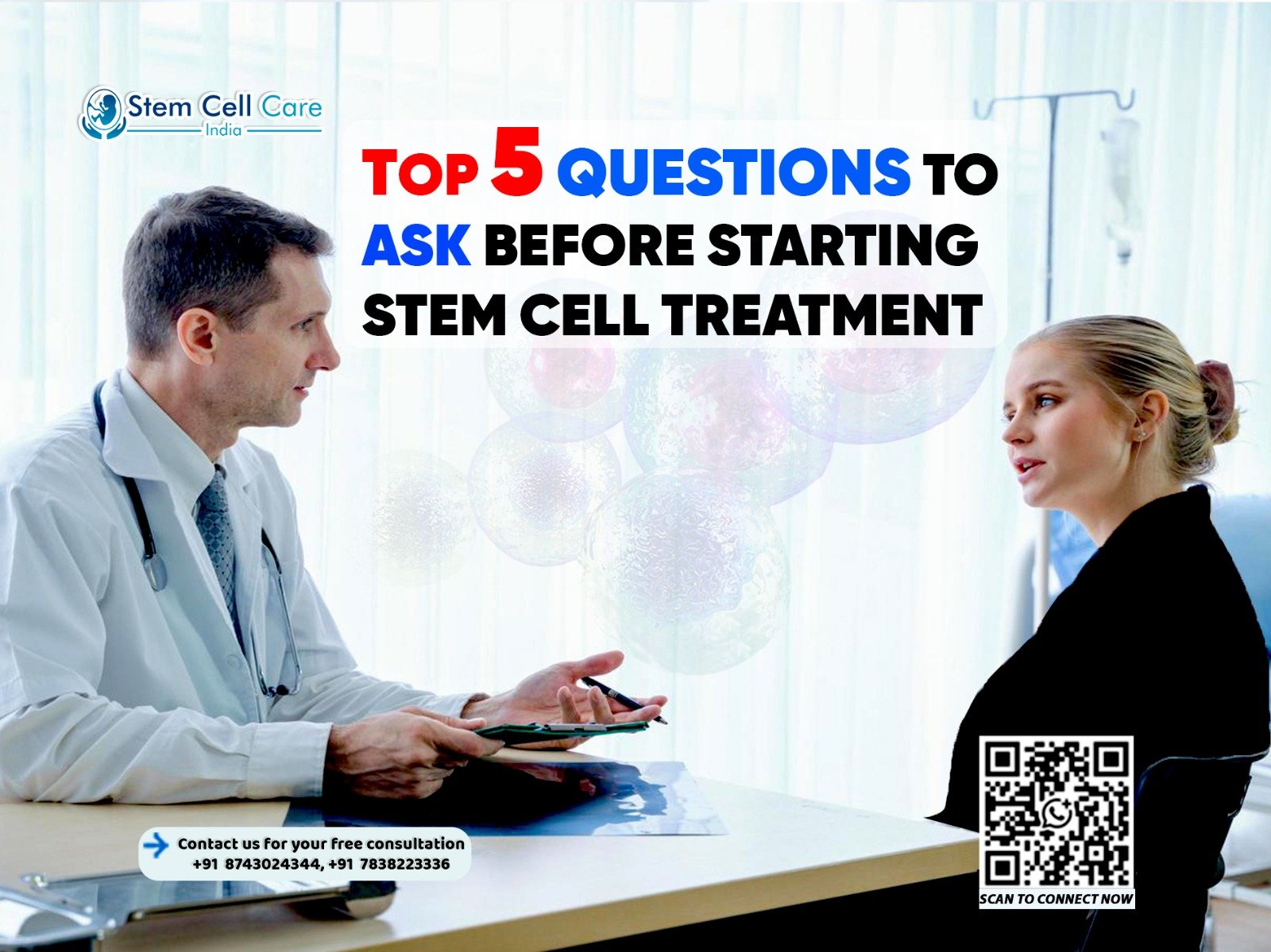
Stem cell therapy is a new form of treatment where specialized cells are used to fix or rebuild damaged tissues in the body. It is gaining popularity since most people think it can address health issues such as joint pain, injury, and disease. However, prior to undertaking this treatment, one should ask the right questions. Stem cell therapy can be beneficial, but it won’t necessarily work the same for all individuals.
Being prepared and aware of the risks can prevent disappointment or injury. This blog will walk you through the top 5 questions to ask prior to starting stem cell therapy. The intention is to assist you in making safe, intelligent, and informed choices regarding your health and treatment.
What Can You Ask Before Starting the Treatment?
Stem cell therapy in mind? It is dominating headlines in India as a solution to joint pain, injuries, and chronic diseases. But beware: not all therapies are safe or efficacious. Before going ahead, having the right set of questions to hand can safeguard your health and pocket and enable you to make an informed and confident choice.
- Is the hospital or clinic approved by a government agency?
Check if the treatment center is accredited by the Indian Council of Medical Research (ICMR) or another trustworthy organization. This indicates that the center complies with laws and safety measures. Shun facilities that are not accredited, as they might provide unsafe or counterfeit treatments.
- What medical condition is this treatment meant to cure?
Stem cell therapy won’t treat all illnesses. Some are still in the test stage. Ask your physician if there’s definitive proof that it will succeed in your specific situation. Don’t rely on promises, demand documented results.
- What type of stem cells will be used, and where were they obtained?
They are alternative sources of stem cells, such as from your own body or donors. What type are they going to use, how will they obtain them, and are they tested and safe? It will let you know what you’re injecting into your system.
- What are the side effects or risks?
No treatment is 100% safe. Stem cell therapy may cause infection, swelling, or may not work at all. Always ask about possible risks and side effects so that you’re not surprised later.
- What is the total cost, and are there any hidden charges?
These procedures of stem cell treatment may be costly. Request cost breakdown. Inquire if the charge covers tests, medication, doctor fees, and follow-up. This enables you to better plan and avoid shock bills.
Are these Questions Helpful?
Yes, it is very useful to ask these questions prior to the initiation of stem cell treatment. Here’s why:
- Keeps You Safe: There can be clinics that do not obey good medical practices. By inquiring about approvals and safety, you can steer clear of artificial or risky treatment that could compromise your health.
- Helps You Understand the Treatment: When you query what the condition of the stem cell therapy is intended for, then you will know whether it is the appropriate option for you. This prevents spending time and money on something that does not work.
- Provides You With Clear Information: Having knowledge of what kind of stem cells are used and how they are sourced makes you aware of what you are putting in your body. It also allows you to verify whether the process is reliable and safe.
- Prepares You for Risks: All treatments have side effects. Asking in advance helps you prepare and make an informed decision. It also indicates whether the doctor is honest and transparent.
- Helps You Manage Costs: Medicines and treatments can be costly. By enquiring about the total cost and additional charges, you won’t be surprised later. It also helps you budget better.
- Builds Trust With the Doctor or Clinic: Physicians who respond to your questions patiently and clearly tend to be reliable. If someone evades your questions, that’s a warning sign.
Binding Off
Before you go in for stem cell therapy, it is very important to pose the right questions. This will make you aware of the procedure, side effects, cost, and what you may reasonably hope for. Always make sure that you check whether the clinic is legitimate and that the treatment is safe for you.
Getting such information can protect your health as well as your finances. Good research and asking simple questions can allow you to make the optimal decision. Your safety always comes first before undertaking any type of medical treatment. Be informed and make an educated decision.
Reference Links:
Top questions patients should ask before stem cell therapy — guidance on safety, legality, and clinical validation before undergoing treatment.
https://www.itrt.es/en/key-questions-stem-cell-treatment/
Stem cell therapy patient safety and decision-making resources — how to evaluate whether a therapy is safe, effective, and ethically conducted.
https://www.isscr.org/patients
What to ask about stem cell sources and quality control — specific questions on cell origin, donor screening, and quality documentation.
https://adamloiacono.com/5-questions-to-ask-before-stem-cell-therapy/
Advice on avoiding unproven stem cell treatments — lists questions patients should ask to understand risks, consent, and treatment legitimacy.
https://www.aboutstemcells.org/info/what-should-i-ask-before-considering-an-unproven-stem-cell-treatment
Stem cell therapy legal and safety considerations — general tips on verifying regulatory approval and clinical trial evidence before proceeding. https://blog.cirm.ca.gov/2013/12/06/questions-to-ask-before-deciding-to-get-a-stem-cell-therapy/