Table of Contents
Summary:
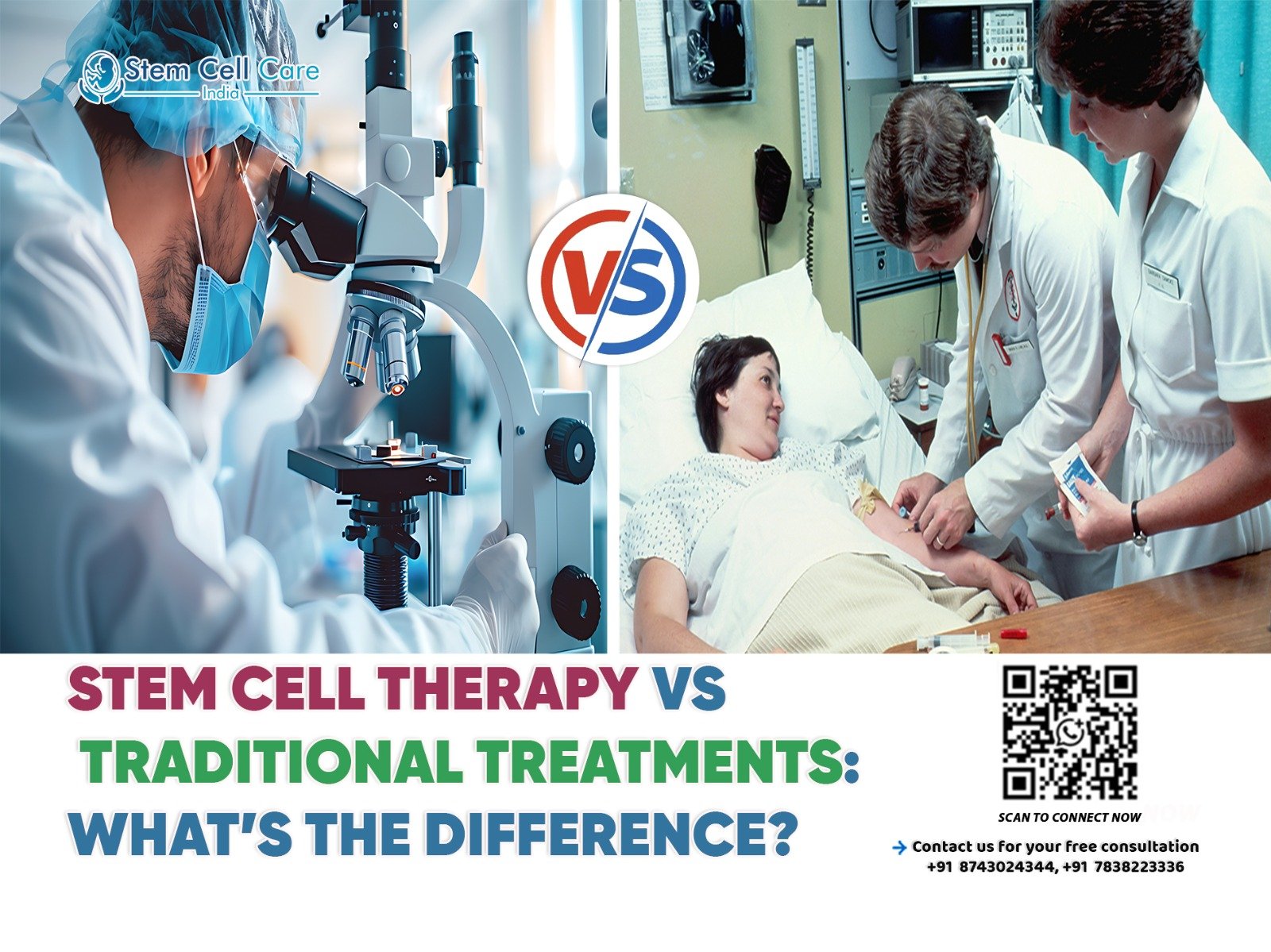
Stem cell therapy utilizes the healing capacity of the body. It uses stem cells to heal damaged tissue. Conventional healing uses drugs or therapy. It only controls symptoms or eliminates the unhealthy tissue.
Stem cell therapy attacks the root of damage. It helps with regrowing tissues instead of just hiding the pain with medication. It’s usually a minimally invasive procedure with fast recovery times, unlike most surgeries, which involve lengthy stays in the hospital and scarring. Medications may include side effects for prolonged usage, such as pitting their strain on internal organs, like the kidneys or digestive system, and so on.
Stem cell treatment works to alleviate situations bordering on chronic diseases, which include joint, autoimmune, and nerve conditions, among others that are considered to be degenerative. The treatment plans are usually guided by one’s needs and facilitate the healing process. Traditional treatment options are still effective in cases of emergencies.
Stem cell therapy in India is rising due to expertise, availability, advanced methodologies, and care for the patients. The doctors are assisting the patients to make safe and proper decisions. The scientists are also doing continuous research to increase the chances and efficacy of the therapy. Stem cell therapy, as well as traditional therapies, is imperative in modern medicine.
FAQs:
1. What is the main difference between stem cell therapy and traditional treatments?
Stem cell therapy is based on the natural restoration of damaged tissue. Stem cell therapy employs certain cells with the ability to restore function. Conventional therapy is based on relieving symptoms with medication or surgery. Most conventional therapies are not capable of correcting the underlying biological issues behind a particular disease. Stem cell therapy is based on the concept of restoring an organ or body part. Conventional therapy is based on relieving diseased tissue. Stem cell therapy is even capable of stopping the progression of the disease in the future.
2. Is stem cell therapy more minimally invasive than standard surgical approaches?
Yes, stem cell therapies are relatively less invasive. Many of them are accomplished only through injections. This means no cuts are involved. Surgeries usually require the opening of the skin through incisions. Also, recovery takes relatively long. Minimally invasive stem cell therapies have shorter recovery periods. They are also associated with less pain and wound formation. Patients usually require shorter hospital stays. This makes stem cell therapies not only safer and more comfortable, but also will not require long hospital stays.
3. Does stem cell therapy offer faster recovery than conventional treatment?
Stem cell therapy often leads to quicker recovery. Repair and regeneration begin soon after therapy. Patients may resume daily activities earlier than with surgery. Conventional treatments usually require longer healing periods. Medications and operations can slow return to normal life. Faster recovery improves quality of life and comfort. Recovery length, however, depends on patient condition and therapy type. Stem cell therapy also reduces post-treatment pain, swelling, and fatigue. Many patients report improved mobility and faster functional improvements compared to traditional approaches, supporting more active lifestyles and independence.
4. Can stem cell therapy treat more conditions than traditional methods?
Stem cell therapy has a wide range of applications. It can help orthopaedic, neurological, and autoimmune conditions. It supports tissue regeneration in places conventional care cannot. Traditional treatments still treat many diseases effectively. Some conditions need immediate surgical or drug-based responses. Stem cell therapy is promising for chronic and degenerative issues. It offers hope where traditional methods are limited. Additionally, it may complement therapies to enhance healing. Many patients experience improved long-term function, reduced pain, and slower disease progression when stem cell therapy is applied appropriately alongside standard care.
5. How do risks compare between stem cell and traditional treatments?
The risk involved with stem cell therapy is generally low in the long term. The side effects are temporary and nominal. There are higher risks involved with the complications arising from traditional modes of treatment. Surgery might cause infections, bleeding, or complications with the anaesthetics used. There might be organ damage and side effects when the medication is administered for an extended period. Stem cell therapy sidesteps the need for large incisions and most possible complications arising with the administration of certain medicines.
6. Can traditional and stem cell treatments be used together?
Yes, they can complement each other. Conventional therapy can provide relief for the immediate condition. Stem cell therapy can provide benefits for long-term healing. Doctors can use a combination for the best results. Surgery can be used for the initial rectification. Then regenerative medicine can be used for a complete heal. A combination of both methods can provide the best results. Personalized plans can provide the best benefits so that patients can be relieved immediately, and then the healing process can be accelerated.
Conclusion:
Stem cell therapy represents a new horizon in the search for a powerful, non-invasive, and naturally holistic process of regeneration. Stem cell therapy demand is rising in India and beyond due to good structure, qualified doctors, and techniques that have evolved to become more accessible.
However, as is the case with all medical advancements, knowledge is king. By learning about both stem cell therapy and traditional therapy, health choices can be made that support not only you as an individual and your best self in your home environment, but also your best self in workplace efforts. Should you find yourself wondering about what’s next, reach out to specialists like Stem Cell Care India and see what happens when hope and medicine meet.
Stem cell therapy for children with cerebral palsy offers targeted improvements in muscle control. It can enhance mobility, reduce stiffness, and support daily activities. Early intervention often leads to better outcomes. Therapists and doctors monitor progress continuously. Family involvement strengthens rehabilitation success. Stem cells may also support neurological repair over time. While results vary per child, many families report meaningful improvements. This therapy represents a hopeful path in regenerative medicine for young patients.
In our fast-paced healthcare environment, it is impossible to escape the paradigm of stem cell therapy. Whether you have read about it recent research papers regarding advancements in stem cell therapy in Delhi offered by world-class clinics or have been somewhat aware of the exciting scientific discussions taking place globally, no one can deny that this regenerative therapy has made a mighty impact, both in terms of the ways we used to treat conditions and the great medical challenges we face.
But what does stem cell treatment in India offer that is better than traditional treatments we are all familiar with? Let’s look at what really makes the biggest differences, without the jargon and positively, and how these therapies could potentially start a wave of real change in our working lives and everyday living.
Difference Between Stem Cell Therapy and Traditional Treatments
Here’s a table that shows their differences:
| Feature | Stem Cell Therapy | Traditional Treatments |
| Approach | It uses stem cells (mesenchymal stem cells) to repair and regenerate damaged tissues. | Relies on drugs, surgery, or other therapies to remove diseased tissues. |
| Invasiveness | It is often minimally invasive. | It is more invasive options, like surgery are interventions |
| Source | Stem cells are sourced from bone marrow, adipose tissue, or donors. | Often uses synthetic drugs or physical interventions. |
| Focus | Promotes natural healing and actual tissue repair. | Manages only symptoms, slows progression, or removes problems. |
| Recovery Time | Faster recovery, less downtime | Longer recovery after surgery or prolonged medication. |
| Conditions Treated | Range includes orthopedic disorders, autoimmune conditions, neurologic issues, and more. | Varies but may fall short of healing or regeneration. |
| Risks & Side Effects | Lower risks and fewer side effects in many cases. | Higher risk, especially with surgery or long-term meds. |
The Real-World Benefits: Why People Are Excited
Let’s consider some of the ways in which stem cell therapy in Delhi and stem cell treatment in India are impacting lives:
Less Pain, Less Drama: The majority of stem cell procedures are minimally invasive. You may just require an injection, not surgery, so you will probably recover quicker and with less pain.
Encourages Actual Healing: Rather than only concealing symptoms, stem cells, particularly mesenchymal stem cells, encourage your body to heal itself, regaining your ability to return to daily routines and work, rather than merely living with disease.
Individualized Solutions: Therapies may be adjusted to your individualized condition, finding equilibrium between personal and professional quality of life.
Wider Reach: From orthopedic and sports injuries to neurological and autoimmune conditions, stem cell therapy provides promise where conventional treatments are often limited.
Affordable and Advanced: India, and particularly Delhi, provides access to top-notch medical specialists and cutting-edge treatment options at a small fraction of international prices.
Bone Marrow Specialized: Bone marrow stem cell transplants continue to be an established option for a majority of blood diseases and cancers in India. Such procedures tap into the powerful healing potential of stem cells to “reboot” the immune system or substitute faulty blood cells.
When Conventional Methods Remain Relevant
While stem cell treatment is thrilling, remember that traditional treatments aren’t going anywhere anytime soon. Standalone surgeries or medication-based therapies remain life-saving for certain acute conditions, and in the majority of cases, the two will probably complement each other, relieving pain today and giving hope tomorrow.
Seeking a Credible Expert? Consider Stem Cell Care India
If you would like to understand the choices available to you, it makes sense to take advice from professionals in regenerative therapies. Stem Cell Care India is a reputable consultancy to take advice on stem cell therapy since we offer up-to-date advice, access to state-of-the-art technologies, and personally customized advice to facilitate you in making educated choices regarding your future and your well-being.
Putting It All Together
Stem cell therapy is a new frontier for those seeking strong, non-invasive, and natural regenerative healing. Stem cell therapy demand is rising in India and beyond due to good structure, qualified doctors, and techniques that have evolved to become more accessible.
However, as is the case with all medical advancements, knowledge is king. By learning about both stem cell therapy and traditional therapy, health choices can be made that support not only you as an individual and your best self in your home environment, but also your best self in workplace efforts. Should you find yourself wondering about what’s next, reach out to specialists like Stem Cell Care India and see what happens when hope and medicine meet.
Reference Links:
Comparison of Conventional Therapies With Stem Cell Therapy in Heart Disease — PubMed (shows real research comparing stem cells with standard care)
https://pubmed.ncbi.nlm.nih.gov/41018340/
Conventional Treatments vs Stem Cell Therapy — Detailed Comparison (Viezec article)
https://www.viezec.com/comparing-stem-cell-therapy-to-traditional-treatments/
Stem Cell Therapy vs Traditional Treatments: Regenerative vs Symptom‑Focused (Point Health Clinic)
https://pointhealthclinic.com/regenerative-medicine-vs-traditional-treatments-what-you-need-to-know/
Stem Cell Therapy as Biological Drugs for Incurable Diseases — Stem Cell Research & Therapy (scientific review)
https://stemcellres.biomedcentral.com/articles/10.1186/s13287-025-04632-8
Stem Cell Therapy vs Traditional Treatment Methods (Meer.com overview on regeneration vs conventional approaches)
https://www.meer.com/en/96115-stem-cell-therapy-vs-traditional-treatment-methods