Table of Contents
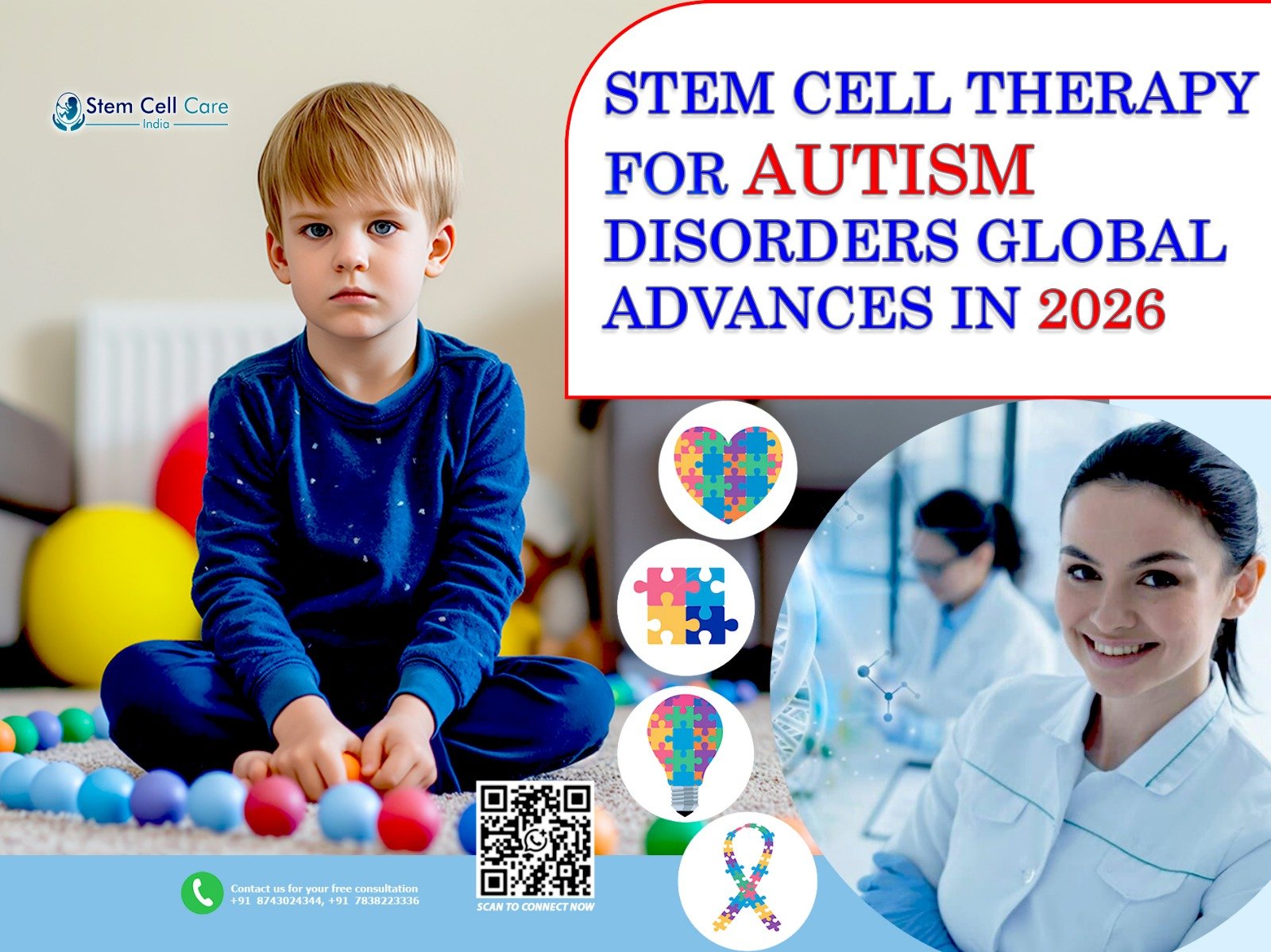
Summary: Autism spectrum disorder (ASD) is still considered the most complex neurodevelopmental challenge that families face. However, stem cell therapy for autism spectrum disorders (ASD) has matured into a more structured, research-based field. This blog examines the research on regenerative medicine for autism and its findings.
Millions of children are impacted by autism spectrum disorders around the world, raising more challenges associated with communication, behavior, or neurodevelopment. Traditional treatment interventions, such as behavioral treatment or supportive medications, target symptoms but not the root cause.
The increasing advancements in scientific research and studies in regenerative medicine for autism have given hope to many patients as a promising investigational approach. As of 2026, stem cell research is now being evaluated in connection with its use in immune system modulation and the regulation of nerve development in the body. Let’s keep reading to understand how stem cell therapy works for autism disorder.
Overview of Autism Disorder
Autism disorder is not a single condition but a group of diverse neurodevelopmental conditions. These are often characterized by deficits in social communication and interaction, as well as repetitive patterns of behavior and interests, or activities. Thus, your child can present with vastly different signs and a complexity level. Here are some signs of autism disorders that typically manifest:
- Difficulties with communication leading to delayed language development
- Challenges with social interaction
- Bad eye contact
- Repetitive movements like hand-flapping
- Excessive sensitivity to light, sound
- Excessive interest in specific topics or objects
These complex interactions between genetic, environmental, and immunological factors are the foundation of autism development.
Why Stem Cell Therapy Is Being Studied for Autism?
Currently, the focus of stem cell therapy for autism research is not on fixing or replacing neurons. Conversely, the attention of scientific research is focused on how stem cells might affect the body’s natural environment.
It has been suggested that stem cells, especially mesenchymal stem cells (MSCs), produce bioactive factors that can possibly facilitate the regulation of immune responses as well as anti-inflammatory processes. This capability has made research on stem cell therapy a promising approach as a supportive treatment within controlled research facilities.
Stem Cells Used in Clinical Trials
As the advancement in stem cell therapy for autism progresses, clinical trials often use the following stem cells:
Mesenchymal Stem Cells (MSCs)
- It is often derived from bone marrow and fat tissues.
- These stem cells are widely used for their anti-inflammatory properties and are considered to produce growth factors that support brain repair.
Bone Marrow Mononuclear Cells
- Found in the patient’s own bone marrow.
- It is often used in autologous transplant, where the patient’s own cells are taken and, after processing, re-injected into the body.
Global Clinical Research Progress up to 2026
Internationally, research has looked into the use of stem cells for autistic patients with a certain level of optimism. The findings show that:
- Stem cell therapies tend to be directed towards safety and viability
- There is a wide variation from one individual to another.
- There is no standard approved procedure globally
All these findings reaffirm that autism stem cell treatment remains an investigational, case-by-case treatment that needs to be observed by a doctor or medical practitioner.
Ethical Concerns for Stem Cell Therapy for Autism
As of 2026, one of the most prominent elements of regenerative medicine, in relation to child and neuroscience disorders, is the level of ethical regulation.
Supportive programs include:
- Informed parental consent
- Clear risk and limitation disclosure
- GMP-qualified lab stem cell processing
- Evidence-based decision-making, as opposed to emotion-based decisions
Families should be warning each other about facilities claiming quick improvements or quick changes in behavior.
For Expert Advice: Stem Cell Care India
Navigating emerging research in autism and regenerative medicine requires careful interpretation. Stem Cell Care India provides consultation-based guidance focused on reviewing scientific evidence, assessing suitability, explaining limitations, and ensuring ethical decision-making, without making treatment guarantees or promotional claims.
The Concluding Thoughts
In 2026, stem cell therapy for autism speaks more to scientific curiosity than to clinical certainty. Immune modulation and neuroinflammatory pathways continue to be a subject of research worldwide, with continuing reinforcement of ethics, regulation, and patient safety. Trusting Stem Cell Care India for expert consultation can also support informed, ethical decision-making.
Frequently Asked Questions
Q1. Is stem cell therapy successful in autism?
Ans. It is not consistently successful. There have been “functional gains” such as increased focus and engagement, although this is not a cure.
Q2. Why are mesenchymal stem cells studied for autism?
Ans. Most of the research on MSCs has involved their immune-modulating and anti-inflammatory signaling properties.
Q3. Can stem cell therapy change autism behavior permanently?
Ans. There is no scientific evidence supporting guaranteed or permanent behavioral changes.
Q4. How can families avoid misleading stem cell clinics?
Ans. Avoid guarantees; insist on medical evaluation and consultation-based guidance.
Q5. Why is professional consultation important before considering therapy?
Ans. Consultation helps evaluate suitability, safety, and ethics alignment with the present research.
Reference Links
Squillaro T., Peluso G., Galderisi U. – Clinical Trials with Mesenchymal Stem Cells: An Update
https://pmc.ncbi.nlm.nih.gov/articles/PMC3636724/
Trounson A., McDonald C. – Stem Cell Therapies in Clinical Trials: Progress and Challenges
https://www.nature.com/articles/nrm.2015.10
Galipeau J., Sensébé L. – Mesenchymal Stromal Cells: Clinical Challenges and Therapeutic Opportunities
https://www.sciencedirect.com/science/article/pii/S1525001625000930